Sunday, October 4, 2026

Sunday, October 4, 2026
* All product/brand names, logos, and trademarks are property of their respective owners.
How to buy a used car in the UK is a common question for first-time buyers. The process can feel overwhelming. But it does not have to be. This guide covers eight simple steps. You will learn about budget, sellers, history checks, inspections, test drives, finance, and reliability. You will also get a quick checklist and answers to common questions. Follow these steps to avoid scams
Your budget should be more than the car price. You must also pay for insurance, tax, and fuel. Do not forget maintenance and repairs.
Include these costs in your budget:
Insurance (get quotes before you buy)
Road tax (check the rate online)
Fuel (based on your mileage)
MOT and servicing
A cheap car can have high running costs. Factor car ownership costs into your budget from the start.
You have two main options. Used car dealerships offer more protection. Private sellers are cheaper but riskier.
Where to look for a used car:
Online sites like Auto Trader
Local used car dealerships
Facebook Marketplace (be careful)
Car auctions (not for beginners)
Check online reviews before you visit. A good used car dealership's reputation matters.
Never skip the history check. A car may have hidden finance, theft, or crash damage. An HPI check reveals all this.
What an HPI check shows:
Outstanding finance
Written-off status
Stolen vehicle record
Mileage discrepancies
Pay £20 for peace of mind. A vehicle history check is money well spent.
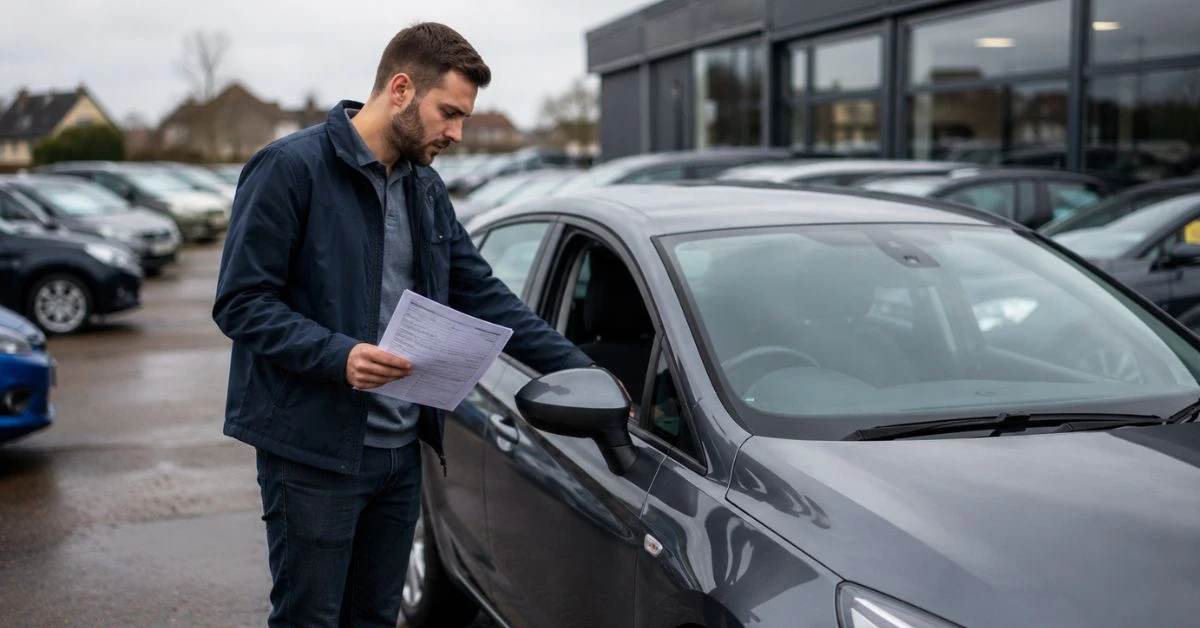
Use a used car inspection checklist to guide you. Walk around the car slowly. Look at every panel.
What to check on the outside:
Different paint shades (crash repairs)
Rust on wheel arches and sills
Uneven panel gaps
Tyre tread depth and condition
What to check on the inside:
Dashboard warning lights
Seatbelt condition
Damp smells (water leaks)
All switches and buttons
Do not rush this step. A thorough inspection saves you money.
Service history shows how the car was cared for. A full history is a good sign. Missing stamps are a red flag.
Check the service book for:
Regular oil changes
Cam belt changes (if due)
Garage stamps and dates
Use the government website for an MOT history check. It is free and easy.
Look for these MOT red flags:
Repeated failures for the same issue
Advisories that were never fixed
Mileage that does not match service records
Service history and MOT checks are key steps when you're buying a used car in the UK.
A test drive is your chance to find hidden problems. Use these test drive tips to spot issues.
What to do on the test drive:
Start the engine from cold (ask the seller not to warm it)
Listen for knocks, rattles, or smoke
Drive over speed bumps (check suspension)
Brake firmly from 30 mph (should stop straight)
On a quiet road, let go of the wheel (should track straight)
If the seller refuses a test drive, walk away. That is a major red flag.
You do not need to pay cash. Many first-time buyers use finance. But be careful.
Types of used car finance:
Hire Purchase (HP) – you are the owner of the car at the end.
Personal Contract Purchase (PCP) – monthly payments are low
Bank loan – more economical than dealer finance
Compare interest rates before you sign. Used car finance can be confusing. Ask questions until you understand.
Some cars are more reliable than others. Japanese and Korean brands are known for reliability.
Reliable used cars to consider:
Toyota Corolla or Yaris
Honda Civic or Jazz
Kia Rio or Ceed
Hyundai i10 or i20
These cars have cheap parts and are easy to fix. A reliable used car list saves you from costly repairs.
Avoid these common mistakes when buying a used car:
Cars with missing service history
Cars that failed the MOT for the same issue
Cars with warning lights on the dashboard
Private sellers who refuse a test drive
Cars with mismatched tyres or cheap brands
A little caution saves you from big problems.
Buying a used car in the UK does not have to be hard. Set your budget first. Find a trusted seller. Check the car's history. Inspect it carefully.
Verify the service and MOT records. Take a proper test drive. Understand your finance options. Choose a reliable brand. Follow these steps, and you can buy a used car with no hidden costs.
A: Set your budget first. Include the car price and running costs. Car ownership costs like insurance and tax add up quickly.
A: Dealers offer more protection under consumer law. Private sellers are cheaper but riskier. A used car dealership's purchase gives you more rights.
A: An HPI check reveals hidden finance, theft, and write-off history. It costs about £20. A vehicle history check is worth every penny.
A: Use the free UK government website. Enter the car's registration number. An MOT history check shows past failures and advisories.

I’m Henry Smith, a content writer and subject matter expert specializing in automobiles and real estate. I create informative, engaging, and easy-to-understand content, sharing practical insights, industry trends, and valuable knowledge with readers.
When shopping for a quad bike in the UAE, one of the first questions buyers ask is, "How much does a
8 September 2026
A tyre puncture can happen without warning and leave you stranded at the most inconvenient time. Whe
30 July 2026
Choosing the right tyres is essential for safe and comfortable driving in Dubai. With extreme summer
28 July 2026
Be the first to share your thoughts
No comments yet. Be the first to comment!
Share your thoughts and join the discussion below.