Monday, July 27, 2026

Monday, July 27, 2026
* All product/brand names, logos, and trademarks are property of their respective owners.
In today’s fast-moving business environment, technology is no longer a support function sitting quietly in the background. It drives operations, communication, customer service, security, and long term growth. Whether a company is managing remote teams, scaling a startup, or upgrading enterprise infrastructure, the demand for reliable equipment continues to grow. As a result, businesses are rethinking how they purchase essential tools and systems.
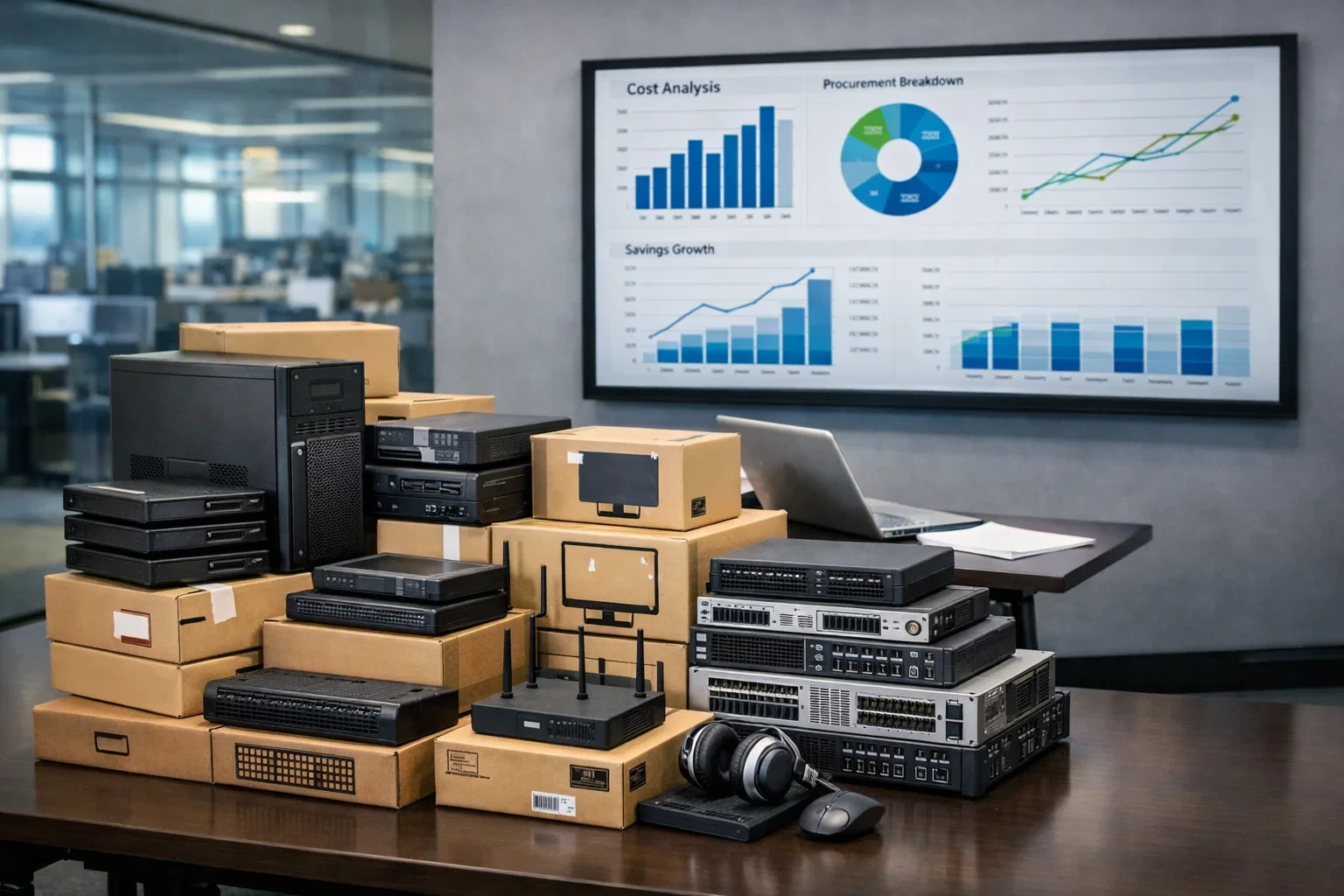
More organizations now prefer to buy IT Hardware in bulk because it offers far more than simple cost savings. It creates consistency, improves planning, strengthens vendor relationships, and reduces the risk of operational delays. Instead of making repeated small purchases that create pricing fluctuations and supply issues, companies are choosing a smarter and more strategic procurement model built around volume purchasing.
This shift is not just happening among large enterprises. Mid-sized businesses and even growing startups are recognizing that bulk purchasing helps them stay competitive. With technology becoming central to every department, a well planned purchasing strategy can directly impact productivity and profitability.
Traditional purchasing methods often involve buying equipment only when a need arises. A laptop breaks, a new employee joins, or a server upgrade becomes urgent. While this reactive model may seem manageable in the short term, it often leads to higher costs, inconsistent quality, and avoidable downtime.
Businesses today need predictability. Procurement teams want better visibility into budgets, finance departments need clearer forecasting, and operations managers require equipment availability without delays. This is where bulk purchasing becomes a practical solution.
Buying in larger quantities allows businesses to negotiate stronger pricing, lock in supply, and ensure all departments work with standardized systems. This improves internal efficiency and reduces the hidden costs associated with fragmented purchasing.
Additionally, supply chain disruptions over recent years have taught businesses an important lesson: waiting until the last minute is risky. Delays in sourcing devices, networking tools, or replacement parts can disrupt entire workflows. Bulk purchasing helps prevent these interruptions by ensuring readiness before problems arise.
One of the biggest reasons companies move toward volume procurement is cost control. Purchasing in larger quantities usually results in lower per-unit pricing. Vendors are more willing to offer discounts, better payment terms, and value-added services when the order size increases.
This creates immediate savings, but the financial advantages go even further.
Administrative costs are reduced because procurement teams spend less time processing multiple orders, comparing vendors, and managing repeated approvals. Instead of handling ten small transactions across several months, businesses can streamline the process into one strategic purchase.
Shipping and logistics expenses also become more manageable. Multiple individual deliveries often create unnecessary transportation costs, while consolidated orders simplify inventory management and reduce handling charges.
Beyond direct savings, businesses also avoid emergency purchasing. Urgent replacements often come with premium pricing and rushed decisions. Planned procurement removes that pressure and supports better financial discipline.
For finance leaders, this approach creates stronger budget forecasting. Instead of unpredictable spending patterns, there is a clear investment plan that aligns with growth objectives and operational needs.
Consistency is one of the most underrated advantages of buying in volume. When different departments purchase equipment separately, businesses often end up with a mix of brands, specifications, and compatibility issues. This creates confusion for employees and unnecessary complexity for support teams.
Standardizing IT Hardware across teams solves this problem.
When employees use the same devices, systems, and accessories, onboarding becomes faster and technical support becomes simpler. Training is more efficient because teams are working within a familiar environment. Troubleshooting also becomes easier since support staff deal with fewer system variations.
This consistency improves cybersecurity as well. Managing updates, access controls, and compliance is far easier when the technology environment is unified rather than scattered across multiple device types.
For growing companies, standardization creates a scalable foundation. As new employees join, they can be equipped quickly with the same reliable setup used across the organization. This improves productivity from day one and strengthens operational stability.
Bulk purchasing changes the nature of the buyer seller relationship. Instead of being treated as a one-time customer, businesses become strategic clients with long-term value. This often leads to better service, priority support, and stronger collaboration.
Vendors are more likely to provide dedicated account management, faster response times, and customized solutions when they know the partnership is ongoing. They may also offer early access to new products, flexible payment arrangements, or warranty extensions that are not available with smaller transactions.
This relationship becomes especially valuable when urgent needs arise. A trusted supplier is far more likely to prioritize a loyal bulk buyer during periods of limited stock or market shortages.
In addition, reliable vendors can offer insights that improve purchasing decisions. They understand market trends, product life cycles, and compatibility concerns that internal teams may overlook. This strategic guidance helps businesses make smarter long term investments rather than short term fixes.
Every growing business reaches a point where reactive purchasing becomes inefficient. Expansion demands planning. New offices, larger teams, upgraded security systems, and increased customer expectations all require stronger infrastructure.
Bulk procurement supports that growth by aligning purchasing decisions with business strategy.
Instead of buying equipment only when pressure builds, leadership teams can plan based on hiring forecasts, operational targets, and technology roadmaps. This improves readiness and removes uncertainty from expansion efforts.
For example, if a company plans to hire fifty new employees over the next six months, preparing equipment in advance avoids onboarding delays. If a business is upgrading its network infrastructure, securing required components early prevents project slowdowns.
This forward thinking approach improves execution across departments. Human resources, finance, operations, and leadership all benefit when procurement becomes proactive rather than reactive.
It also supports hybrid and remote work models. Companies with distributed teams need reliable access to equipment across locations. Bulk purchasing makes deployment faster and more consistent, especially when managing large scale transitions.
Sustainability has become an important part of business decision making, and procurement plays a major role in that conversation. Buying smarter is not only financially responsible but also environmentally beneficial.
Consolidated purchasing reduces packaging waste, lowers transportation emissions, and improves inventory planning. Fewer rushed shipments mean a smaller environmental footprint.
Businesses can also work with suppliers that prioritize certified products, responsible recycling programs, and energy efficient equipment. This strengthens corporate responsibility efforts while maintaining operational performance.
When purchasing is planned strategically, companies are less likely to overbuy unnecessary products or replace equipment too early. Better lifecycle management supports both sustainability goals and cost efficiency.
This matters increasingly for businesses that report environmental performance to stakeholders, clients, and investors. Procurement decisions are no longer isolated operational choices. They are part of the broader business reputation.
While the benefits are clear, successful volume procurement requires careful planning. Buying large quantities without a clear strategy can create waste instead of value.
The first mistake is purchasing without accurate forecasting. Businesses must understand real usage patterns, growth expectations, and replacement cycles before placing large orders. Guesswork leads to excess inventory and unnecessary spending.
The second issue is choosing price over reliability. The cheapest supplier is not always the best partner. Product quality, warranty coverage, support responsiveness, and delivery consistency matter just as much as unit cost.
Another common mistake is ignoring compatibility. Procurement teams should work closely with technical departments to ensure all purchased systems align with existing infrastructure and plans.
Finally, businesses should avoid treating procurement as a one department decision. Finance, operations, IT leadership, and executive teams should all contribute to purchasing strategy to ensure alignment across the organization.
Bulk purchasing has evolved from a cost saving tactic into a strategic business advantage. Companies that plan ahead, negotiate smarter, and standardize their systems create stronger operations and better financial control.
As technology becomes increasingly central to daily performance, businesses cannot afford fragmented procurement decisions. A thoughtful approach to sourcing IT Hardware improves efficiency, reduces risk, and supports sustainable growth across every department.
The smartest B2B strategies are rarely about spending less alone. They are about spending with purpose. When organizations move from reactive buying to strategic bulk procurement, they position themselves for stronger performance, better resilience, and long term success.
In a competitive market where speed and reliability matter, choosing the right purchasing model can be the difference between constant disruption and confident growth. That is exactly why bulk buying is no longer just an option. It is becoming the smarter business standard.

I am Roman L. Jones, a writer who enjoys turning ideas into simple, engaging, and meaningful content. I focus on creating clear and relatable blogs that inform readers and keep them interested from start to finish.
Most people who use a computer every day have a working mental model of what is inside it. There is
3 July 2026
Many apps promise location updates, screen-time details, app monitoring, and family safety support.
29 June 2026
In 2026, businesses are investing in digital products faster than ever before. From AI-powered platf
8 June 2026
Be the first to share your thoughts
No comments yet. Be the first to comment!
Share your thoughts and join the discussion below.





11.webp&w=3840&q=75)