Wednesday, October 7, 2026

Wednesday, October 7, 2026
* All product/brand names, logos, and trademarks are property of their respective owners.
Buying a condo feels simpler than buying a house. There is no yard to maintain, no roof to worry about, and the homeowners association (HOA) handles the big exterior jobs. It is easy to assume that fewer responsibilities means fewer risks, and that a condo inspection is an optional extra.
That assumption can get expensive.
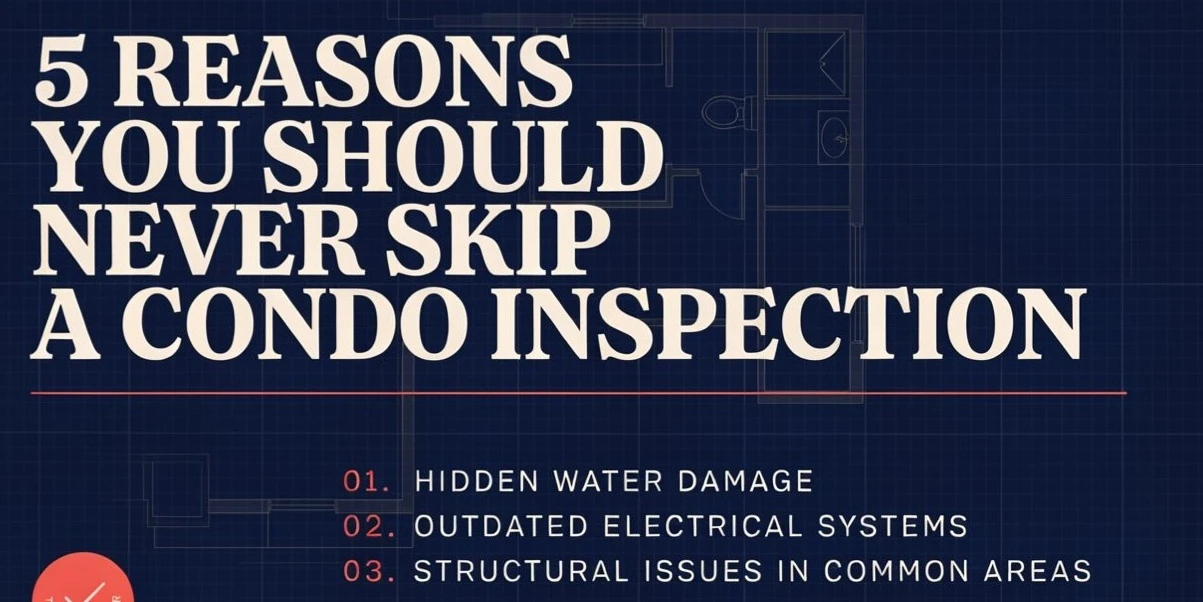
A condo is still a home, with plumbing, wiring, appliances, and mechanical systems that belong to you the moment you close. It also shares walls, floors, and pipes with other people. Problems in one unit rarely stay in that unit. Here are five reasons a condo inspection deserves a place in your buying process, however small or new the unit looks.
1. You Own More Than You Might Think
Many buyers believe the HOA covers most repairs. In reality, the dividing line is usually drawn at the walls of your unit, and it varies from one building to the next.
In most condos, everything inside your space is your responsibility. That commonly includes the water heater, the heating and cooling equipment, the electrical panel serving your unit, plumbing fixtures, appliances, and often the windows or sliding doors, depending on the HOA rules.
Those are not small items. Replacing an aging water heater or air conditioning system can cost thousands of dollars, and a failing one rarely gives much warning. An inspector checks the age, condition, and performance of these systems so you know what you are really buying. You can then plan for repairs or replacements instead of discovering them a month after move-in.
Worth knowing: the inspection focuses on the unit itself. HOA-owned areas such as roofs, hallways, and shared mechanical rooms are generally outside the usual scope, and the inspector can only comment on what is visible and accessible. That is why the next steps in this article matter too.
2. Water Problems Travel Between Units
In a standalone house, a leak is your problem. In a condo building, it can be your problem, your neighbor's problem, or both.
Water is among the most common sources of damage in multi-unit buildings because supply lines, drain pipes, and appliances sit close together. A slow leak under a neighboring kitchen sink, a failing seal around a shower, or a poorly installed washing machine hookup can show up as stains, soft spots, or mold in the unit below.
A condo inspection looks for the warning signs. That can include ceiling stains, damp cabinets, bubbling paint, musty odors, poor drainage, worn caulking, and signs of past repairs that were not done properly. Inspectors may also use tools such as moisture meters to check areas that look fine on the surface.
Hidden moisture is the sort of issue a quick walkthrough with a real estate agent will rarely reveal. Catching it before closing can spare you from repair bills, insurance disputes, and an uncomfortable conversation with the neighbors upstairs.
3. It Gives You Negotiating Power and Budget Clarity
An inspection report turns vague concerns into documented facts. That has real value at the negotiating table.
If the report uncovers meaningful issues, you generally have options. You can ask the seller to complete repairs, request a credit toward closing costs, negotiate the price, or, in serious cases, reconsider the purchase. How much leverage you have depends on your contract, your local market, and the timing of your contingency period, so it helps to talk it through with your agent.
Even when the report is clean, you benefit. You gain confidence in the price you are paying, and you get a clear picture of what upkeep is coming in the next few years.
Choosing the right professional matters here. If you are buying in the area, look for a Los Angeles home inspection company that regularly inspects condos and townhomes, since multi-unit properties raise different questions than single-family houses. Ask what the inspection includes, how soon the report arrives, and whether the inspector will answer questions after the visit.
A thorough report is a tool. The better it is, the more useful it becomes.
4. It Reveals How the Unit Connects to the Building
A condo does not exist in isolation, and some of the most important details sit where your unit meets the rest of the structure.
During the inspection, an expert will pay attention to elements such as:
These clues can also hint at how well the building is maintained as a whole. A pattern of deferred repairs, visible damage near shared areas, or recurring problems in similar units can be a signal to ask more questions.
That brings up an important companion step. An inspection covers the physical condition of the unit, not the finances or rules of the association. Before you commit, review the HOA documents with your agent or an attorney. Look at the budget, reserve funds, pending special assessments, meeting minutes, and any known disputes or planned repairs. Together, the inspection report and the HOA paperwork give you a far more complete view of the purchase.
5. It Protects Your Safety and Your Peace of Mind
Beyond money, a condo inspection is about living somewhere safe.
Some of the most serious problems are invisible to the untrained eye. Outdated or overloaded wiring, missing safety devices, improperly vented appliances, and faulty gas connections can pose genuine risks. These are not cosmetic concerns, and they are not the type of thing a fresh coat of paint reveals.
An inspection also helps you judge how comfortable the home will be day to day. Do the windows seal properly? Does the heating and cooling system keep up? Are there signs of pests or poor ventilation? Small answers add up to a big difference in how you feel about your home a year from now.
There is also something less measurable: confidence. Signing for a major purchase is stressful. Knowing a qualified professional has looked at the unit and explained what they found lets you make the decision with clear eyes, not crossed fingers.
What a Condo Inspection Covers (and What It Doesn't)
Understanding the scope helps you set realistic expectations. A typical condo inspection looks at the visible and accessible parts of the unit, such as:
It generally does not cover areas controlled by the association, hidden defects behind walls, or specialized concerns that call for a separate expert, such as a pest specialist or structural engineer. If the inspector sees something outside their scope, they will usually recommend a specialist for a closer look.
How to Get the Most From Your Inspection
A few simple habits make the visit more valuable:
A condo can be a smart, convenient way to own a home, but convenience should not mean going in blind. Because you own what is inside the walls and share what is behind them, a condo inspection helps you understand both. It uncovers hidden problems, supports your negotiation, clarifies your upcoming costs, and gives you real peace of mind.
The fee is small compared with the price of the unit. Skipping it saves a little today and risks a lot later.

For many people in the UK, saving for a large deposit and securing a mortgage can feel increasingly
9 June 2026
Be the first to share your thoughts
No comments yet. Be the first to comment!
Share your thoughts and join the discussion below.