Sunday, October 4, 2026

Sunday, October 4, 2026
* All product/brand names, logos, and trademarks are property of their respective owners.
Stairs get more daily wear than almost any other part of a building, yet the edge of each step is often the last thing anyone thinks about. A step's leading edge is where feet land first, where shoes scuff and slide, and where moisture, dust, or polish tend to collect. Over time, that edge smooths out, the tread coating wears thin, and grip that once felt secure starts to feel unreliable.
This isn't always obvious until someone slips. A worn stair nosing, a loose carpet edge, or a smooth painted step lip can turn an ordinary staircase into a hazard, particularly in homes with older residents, in rental properties, or in commercial buildings where dozens of people use the same stairs every day.
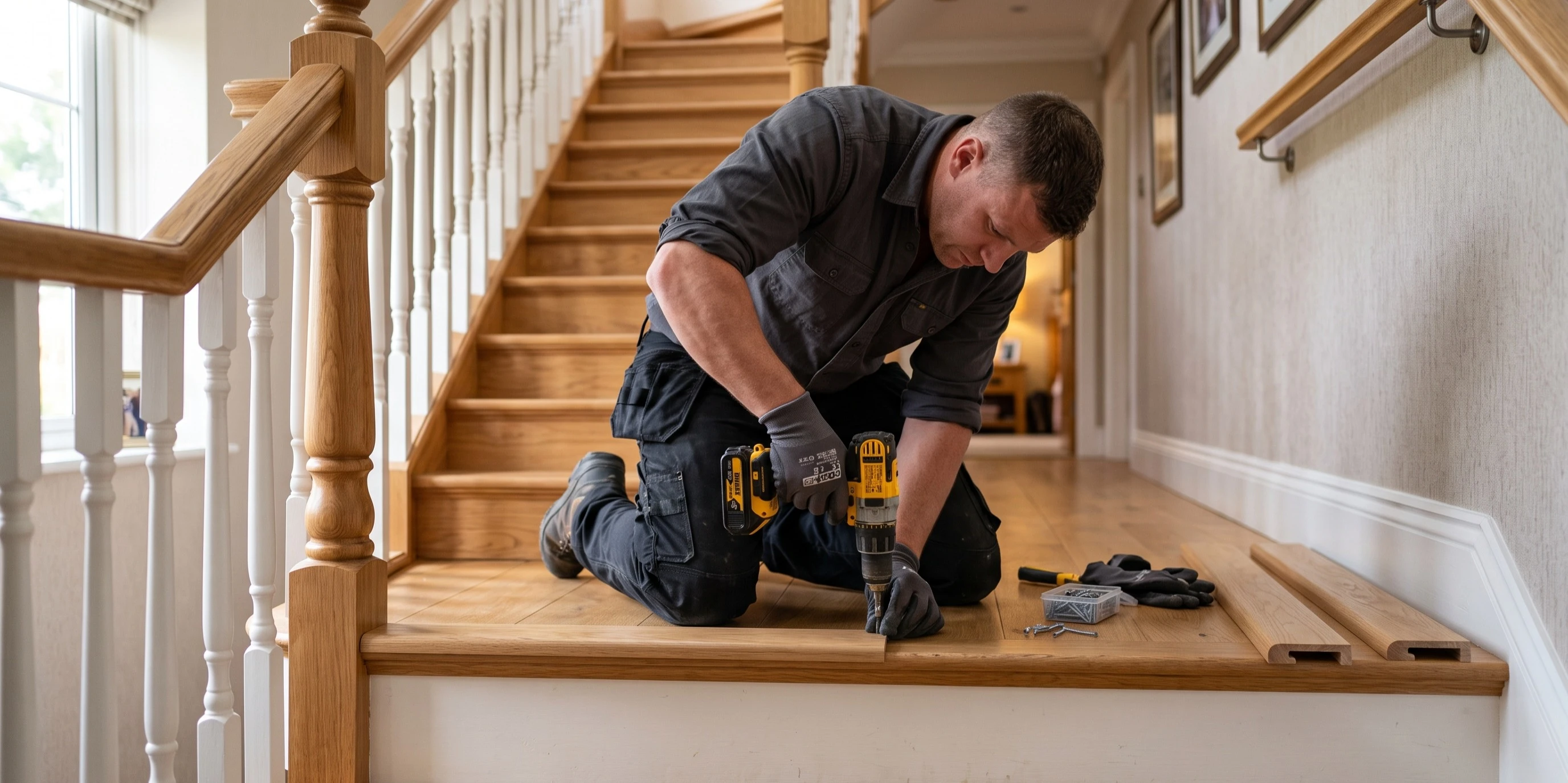
Anti-slip stair nosing is one of the simplest ways to address this. Fitted correctly, it protects the vulnerable edge of a step, improves grip underfoot, and often makes the stair edge easier to see. It's a small, unglamorous product that does a genuinely useful job.
Stair nosing is a strip fitted along the front edge of a step, usually where the tread meets the riser. It's designed to cover and reinforce the part of the stair that takes the most impact and the most wear.
Most anti-slip stair nosing incorporates some form of textured, grooved or inset surface to increase traction underfoot, rather than relying on the bare flooring material. Beyond grip, nosing also protects the physical edge of the step from chipping, splitting or fraying, which is especially relevant on stairs finished in carpet, laminate, vinyl or timber.
Many profiles also introduce a visual contrast at the step edge. A clearly defined line along each stair can help people judge depth and distance more easily, which matters on stairs with uniform colouring or lower lighting.
The front edge of a step absorbs disproportionate stress compared with the rest of the tread. A few factors make this part of the stair particularly vulnerable:
The requirements also shift depending on setting. A domestic staircase used by a small household faces far less cumulative wear than a staircase in an office, school or retail unit used by hundreds of people a day. Commercial stair nosing therefore often needs to account for higher traffic volumes and more frequent cleaning, even if the underlying principles are the same.
There isn't one material that suits every staircase. The right choice depends on the environment, the existing flooring, the amount of traffic, and how the finished stair needs to look. Three material types tend to come up most often when comparing options.
Aluminium is a common choice where stairs see frequent or heavy use. It's a naturally hard-wearing metal, so it holds up well against repeated foot traffic without the edge softening or deforming the way some softer materials can over time.
Beyond durability, aluminium stair nosing typically offers:
For a hallway staircase in a busy family home, a communal stairwell in a block of flats, or a staircase in a workplace, aluminium is often worth considering as a starting point.
Wood-effect aluminium nosing is aimed at situations where practicality and appearance both matter. It keeps the underlying strength of an aluminium profile but is finished to resemble timber, which makes it easier to fit sympathetically alongside wood, laminate or wood-look vinyl flooring.
This option tends to suit:
It still delivers the same core benefits as standard aluminium nosing, edge protection and anti-slip grip, but without introducing a visibly different material into an otherwise wood-toned staircase.
UPVC nosing is generally the lighter, more budget-conscious option of the three. It's straightforward to cut and fit, which makes it popular for smaller domestic projects or situations where a contractor needs a practical solution without extensive tooling.
Typical characteristics include:
UPVC won't necessarily be the right choice for a high-traffic commercial stairwell, but for many household stairs it offers a sensible balance of cost, ease of installation and edge protection.
Most stair nosing profiles have a relatively flat or angled leading edge. Bullnose nosing is different: it has a rounded, curved front edge rather than a square one.
This rounded profile is often chosen for a few reasons:
Bullnose is a good example of a decision that comes down to preference as much as function. Two stairs with identical traffic levels might reasonably use different profiles simply because one owner prefers the rounded look.
| Factor | Aluminium | Wood Effect Aluminium | UPVC |
|---|---|---|---|
| Durability | Generally strong, suited to sustained wear | Similar strength to standard aluminium | Lighter-duty, suited to moderate use |
| Appearance | Clean, metallic finish | Timber-look finish over an aluminium core | Available in multiple colours and styles |
| Weight | Heavier than UPVC | Similar to standard aluminium | Lightweight and easy to handle |
| Typical application | Residential and commercial stairs with regular traffic | Homes and interiors with wood-toned flooring | Domestic stairs and lighter-duty projects |
| Maintenance | Low, generally easy to keep clean | Low, similar to standard aluminium | Low, though may show wear faster under heavy use |
| Budget considerations | Mid-to-higher cost bracket | Similar to standard aluminium | Typically a more cost-conscious option |
This table is a general guide rather than a fixed rulebook. The right material still depends on the specifics of each staircase. Mafson LTD's stair nosing best sellers collection can be a useful reference point for seeing what other buyers have chosen, but it works best alongside, rather than instead of, an honest assessment of the specific stair.
These are starting points rather than fixed rules. The final decision should reflect the actual conditions of the staircase, not just the category of building.
Choosing stair nosing isn't really about finding the single "best" product. It's about matching a profile to the staircase in front of you: how many people use it, what it's made from, whether it's exposed to moisture, and how it needs to look once fitted. A material that works well in a quiet family hallway may not be the right specification for a busy office stairwell, and a profile chosen purely because it's popular may not suit every environment.
Property owners and contractors comparing different profiles can explore Mafson LTD to get a range of aluminium, wood-effect, UPVC and bullnose options in one place.

A home elevator can make everyday movement between floors more convenient, especially in multi-store
25 September 2026
When a corner starts chipping, cracking, or scuffing, the instinctive response is often to reach for
14 September 2026
Staircases are among the most heavily used — and most overlooked — areas of any building
10 September 2026
Be the first to share your thoughts
No comments yet. Be the first to comment!
Share your thoughts and join the discussion below.

.webp&w=3840&q=75)