Sunday, October 4, 2026

Sunday, October 4, 2026
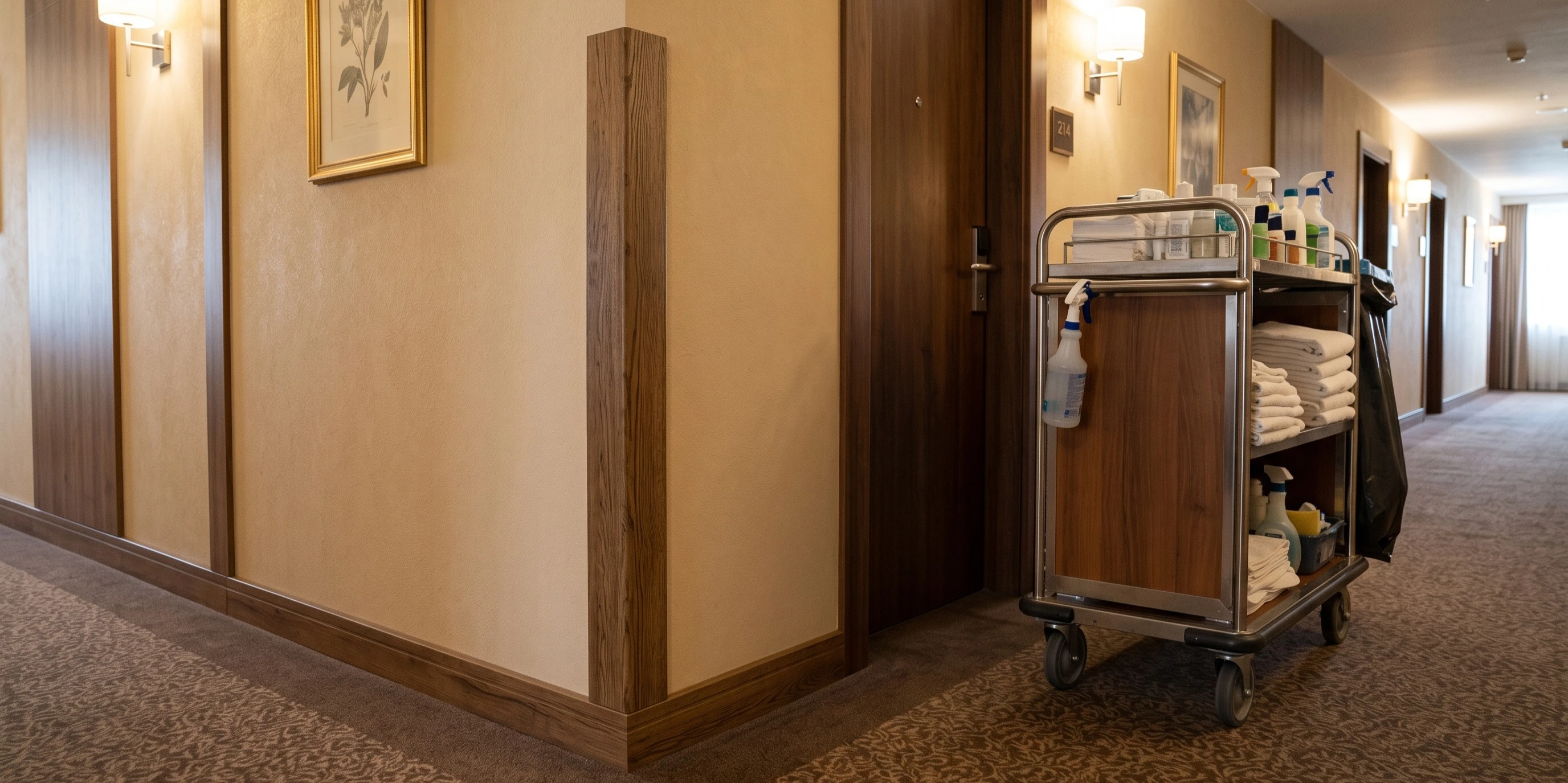
* All product/brand names, logos, and trademarks are property of their respective owners.
Walk down the corridor of almost any busy building, and you'll spot the same thing within a few metres: chipped plaster at waist height, a scuffed arris bead, a corner where the paint has been worn back to the filler underneath. Nobody plans for it, and no single incident causes it. It's the accumulation of trolleys, wheelchairs, suitcases, cleaning carts, delivery boxes and shoulders brushing past the same spot several hundred times a week.
For facilities and property teams, damaged corners are a recurring nuisance. They look neglected long before anyone budgets to repair them, and once a corner has been patched two or three times, the finish rarely matches the surrounding wall. Wood effect wall corner protectors offer a way out of that cycle: a hard-wearing PVC trim that takes the knocks instead of the plaster, while reading visually as timber rather than as an industrial safety fitting.
External corners are the most vulnerable part of any wall. They project into circulation space, they're usually formed with a thin skim of plaster over a metal or PVC bead, and they concentrate impact along a single narrow line. A knock that would leave no mark on a flat wall can chip a corner instantly.
Several common conditions make the problem worse:
The damage also tends to be cumulative rather than dramatic. A dent here, a scrape there, and within a year or two the corner looks tired enough to need making good.
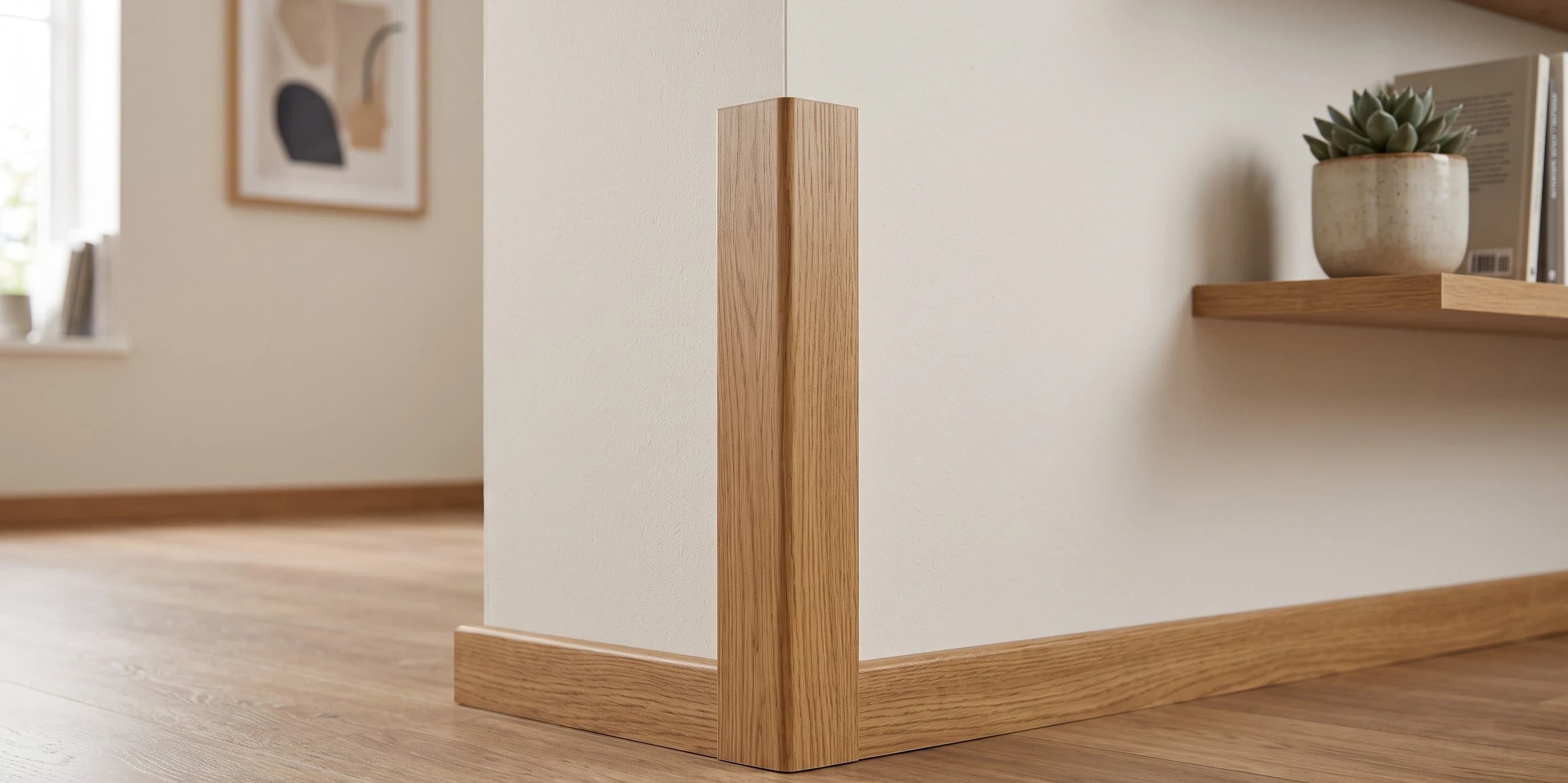
A wood effect corner protector is a length of rigid plastic trim, typically PVC, fitted over an exposed corner or edge to absorb impact. The surface carries a printed or laminated wood grain finish, so the trim resembles timber moulding rather than plain white plastic.
Finishes commonly available include light oak, walnut and beech tones, which cover most of the timber shades already used in commercial and residential interiors. The profile sits proud of the wall by a few millimetres and shields both faces of the corner along its full height, or along whatever length is needed.
The idea is straightforward: put a sacrificial, durable layer where the impacts land, and choose one that looks like it belongs.
PVC works well in this role because it's tough without being brittle. It resists the sort of glancing blows and scrapes that chip plaster, and it doesn't dent the way softwood mouldings or thin metal trims can. Where a corner previously took the impact directly, the trim now distributes and absorbs it.
That covers the great majority of wall corner damage in occupied buildings, which is rarely a single heavy collision. It's knocks, scrapes, trolley wheels, vacuum cleaners, chair backs and equipment being manoeuvred past a pinch point day after day.
Plain white or grey corner guards are perfectly effective, but they announce themselves. In a hotel lobby, a private clinic, a boutique retail unit or a well-specified office, that visual noise is a genuine drawback. Designers have often accepted damaged corners rather than fit protection that undermines the scheme.
A wood effect finish solves that tension. In an interior that already contains timber or timber-effect doors, skirting boards and architraves, a wood grain corner trim reads as part of the joinery package rather than as protective hardware. Matched reasonably well to the existing tones, it can look like a deliberate detail.
This is why wood effect corner protectors have found a place in environments where a purely functional corner guard would previously have been ruled out on appearance alone.
Real timber corner mouldings are an option, and in the right setting they look excellent. They also bring the usual demands of wood into a high-traffic environment. Timber needs sealing or finishing; it can mark and absorb moisture, and it may need sanding and refinishing once it's been knocked about. In corridors that are mopped daily, that's a maintenance commitment.
| Features | Wood effect PVC trim | Real timber moulding |
|---|---|---|
| Appearance | Printed or laminated wood grain finish; can match oak, walnut or beech tones | Natural timber grain and texture |
| Cleaning | Smooth, non-porous surface; wipes clean | Can mark; may need more careful cleaning products |
| Moisture resistance | Unaffected by damp corridors, washroom approaches, kitchens | Can swell, warp or split in humid areas |
| Ongoing finishing | None required | May need periodic oiling, waxing or repainting |
| Repair after damage | Trim absorbs impact; wall behind stays protected | May need sanding, refinishing or replacement after knocks |
| Typical use case | High-traffic commercial and public areas | Lower-traffic settings where a natural material is preferred |
Wood effect corner protectors suit almost any interior that is both busy and visible:
Not every corner is the same, and the profile matters as much as the finish.
| Profile type | Best suited to | Key feature |
|---|---|---|
| 90-degree PVC angle trim | Clean, square external corners | Equal legs on both sides; some carry the decorative finish on both faces, so they work on internal or external corners without one leg looking unfinished |
| PVC angle cover trim | Existing edges, joints or previously damaged corners | Designed to cover as well as protect, making it a practical choice in refurbishment work |
| Unequal PVC corner trim | Irregular walls, reveals or uneven joints | One leg wider than the other, so it sits flush where a symmetrical profile won't |
If you're weighing up which profile suits a particular corner, it's worth comparing the range of angle trims, cover trims and unequal profiles offered by specialists such as https://www.wallcornerprotectors.co.uk/, since the right choice usually depends on the specific wall condition rather than on a general rule.
Corner protection tends to get treated as something you add after the damage appears. A corridor starts looking worn, someone notices the plaster is chipped at three or four points along the same run, and a repair job gets raised. It works far better the other way round: specified alongside the doors, skirtings and floor finishes at the planning stage, rather than retrofitted once the walls have already taken a beating.
Considered at that stage, a wood effect wall corner protector stops being a repair and becomes part of the detailing. It sits with the rest of the joinery instead of standing out as an add-on, and it means the corridor still looks the way it was designed to look two or three years after opening, not just on handover day.
Whether you're fitting out a single corridor or specifying protection across an entire building, it's worth treating wall corners as part of the interior design brief rather than an afterthought. Get that decision right at the outset, and it's one you won't need to revisit for years.

Be the first to share your thoughts
No comments yet. Be the first to comment!
Share your thoughts and join the discussion below.