Sunday, October 4, 2026

Sunday, October 4, 2026
* All product/brand names, logos, and trademarks are property of their respective owners.
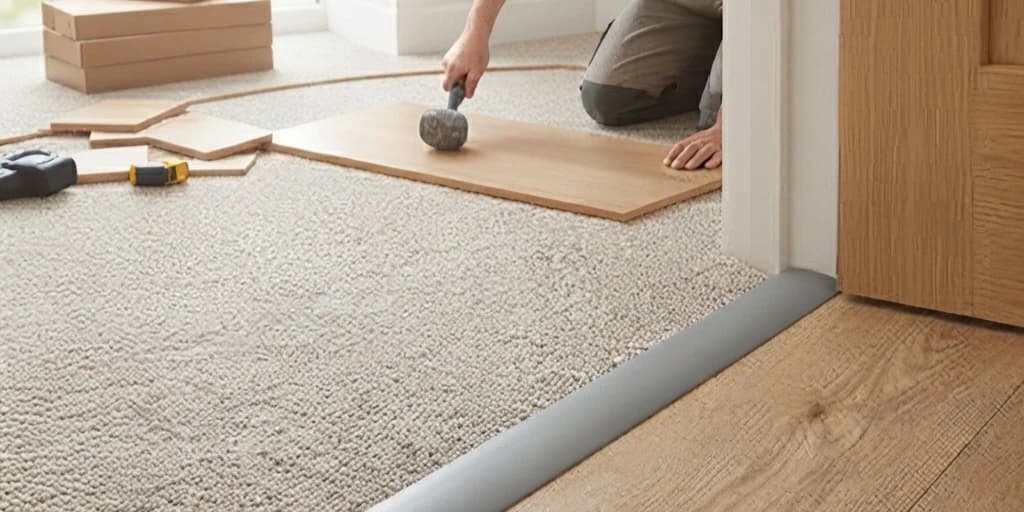
Unwanted noise travelling between floors is one of the most common complaints in homes, flats and offices across the UK. Footsteps overhead, furniture being dragged across a room, or the dull thud of children playing upstairs can quickly become a source of daily frustration, particularly in older properties or multi-storey buildings with limited sound insulation. This is where acoustic underlay comes in. Fitted beneath laminate, wood or engineered wood flooring, it is designed specifically to reduce the transmission of impact and airborne noise, helping create a calmer, more comfortable living or working environment.
This guide explains what acoustic underlay is, how it works, and what to consider before choosing one for your next flooring project.
An acoustic underlay is a layer of material installed between the subfloor and the finished flooring, specifically designed to reduce sound transmission. Unlike basic cushioning underlay, which mainly softens the feel of a floor underfoot, acoustic underlay is designed with sound-damping performance as its primary function.
It sits within the overall flooring system, working alongside the subfloor, the flooring itself, and sometimes an additional acoustic membrane, to reduce the amount of noise that passes through to rooms below or adjacent spaces. In flats, converted buildings, and multi-storey properties, this layer often plays an important role in meeting residents' acoustic expectations and, in some cases, contributing to Building Regulations requirements for sound insulation between dwellings.
To understand how acoustic underlay helps, it is useful to distinguish between the two main types of noise it addresses.
Natural acoustic underlay primarily targets impact noise reduction by absorbing vibrations at the point of contact, preventing them from transferring efficiently into the subfloor and the structure beneath. Materials with a degree of resilience and cellular structure, such as cork or certain foams, compress slightly under pressure and dissipate energy rather than passing it straight through. This cushioning effect reduces the intensity of vibrations reaching the floor below.
Acoustic performance is never determined by the underlay alone. Subfloor construction, flooring material, the presence of an acoustic membrane, and even skirting details all influence the final result. A good acoustic underlay improves the system, but it cannot fully compensate for a poorly constructed floor.
When specified correctly, acoustic underlay offers several practical advantages:
These benefits make acoustic underlay a sensible consideration for anyone renovating a property or fitting new flooring in a space where noise transfer is likely to be noticed.
Not every acoustic underlay is suitable for every flooring type. Manufacturers typically specify compatible underlay based on the flooring's construction and thickness.
Acoustic underlay for laminate flooring generally needs to provide a stable, even base while absorbing impact noise. Because laminate is a floating floor, the underlay also helps manage minor subfloor imperfections and reduces the hollow sound sometimes associated with laminate installations.
Acoustic underlay for wooden floors must account for the additional weight and rigidity of solid wood. The underlay should be dense enough to support the flooring without compressing excessively over time, while still offering meaningful sound insulation underlay properties.
Acoustic underlay for engineered wood typically needs to balance stability with sound absorption, as engineered boards are more dimensionally stable than solid wood but still benefit from a dedicated acoustic layer, particularly in upper-floor installations.
In all cases, it is important to check the flooring manufacturer's specific requirements, as using an incompatible underlay can affect both the flooring's performance and any product warranty.
Cork has long been used in flooring applications due to a combination of physical properties that suit acoustic performance. Its natural cellular structure, made up of millions of tiny air-filled cells, gives cork a degree of compressibility that helps absorb vibration and impact energy rather than transmitting it directly through the floor.
Beyond its acoustic characteristics, cork also offers useful thermal insulation, helping to reduce heat loss through the floor. It is naturally resilient, returning to its original shape after compression, which supports long-term durability under normal foot traffic. As a renewable material harvested from the bark of cork oak trees without felling them, cork is also widely regarded as a sustainable flooring underlay option.
Natural materials such as cork underlay are commonly considered where acoustic performance, resilience and sustainability are important factors, making cork a practical choice for homeowners and specifiers looking for a natural acoustic underlay rather than a purely synthetic alternative. https://www.corkrolls.co.uk/ offers various cork-based underlay options suited to different flooring types and project requirements.
It is worth stressing that cork, like any material, performs differently depending on its density, thickness and the flooring system it supports. It should not be assumed superior in every scenario without considering the specific project requirements.
Standard underlay is often included as a basic component with flooring purchases, primarily to add comfort underfoot and to smooth over minor subfloor irregularities. Acoustic underlay is a distinct category, selected or engineered specifically to improve sound insulation performance.
| Feature | Standard Underlay | Acoustic Underlay |
|---|---|---|
| Primary purpose | Cushioning and levelling | Impact noise reduction |
| Sound insulation focus | Minimal | Specifically engineered |
| Common materials | Basic foam | Cork, rubber, specialist foams |
| Typical use case | General flooring comfort | Flats, multi-storey properties, renovations |
This distinction matters when floor noise reduction is a genuine priority, rather than an incidental benefit.
Selecting the right product involves more than picking the thickest option available. Consider the following:
It is a common misconception that a thicker underlay automatically delivers better acoustic insulation. In reality, density, material composition and the overall flooring build-up have a greater influence on acoustic performance than thickness alone.
Acoustic underlay plays a meaningful role in reducing footstep noise, impact sound and general floor-related disturbance, particularly in flats, converted properties and busy multi-storey buildings. While no underlay can guarantee a specific level of soundproofing on its own, choosing a product suited to your flooring type, subfloor and acoustic goals contributes significantly to a quieter, more comfortable result.
Taking the time to understand the differences between standard and acoustic options, and considering materials such as cork alongside synthetic alternatives, helps ensure the finished floor performs as intended for years to come.

We specializes in high-quality cork sheets, rolls, and insulation solutions for industrial, commercial, and DIY applications. We focus on providing durable, sustainable, and easy-to-install cork products to meet diverse material and insulation needs.
Anyone who has taken on an outdoor project in Britain knows the weather rarely cooperates for long.
17 September 2026
Walk into most UK homes, and you'll find at least one doorway where the flooring doesn't quite line
4 September 2026
Walk into a modern luxury home today, and you’ll notice something interesting—the bathro
13 May 2026
Be the first to share your thoughts
No comments yet. Be the first to comment!
Share your thoughts and join the discussion below.

.webp&w=3840&q=75)