Sunday, October 4, 2026

Sunday, October 4, 2026
* All product/brand names, logos, and trademarks are property of their respective owners.
Walk into most UK homes, and you'll find at least one doorway where the flooring doesn't quite line up. Perhaps the kitchen tiles sit slightly higher than the hallway laminate, or there's a persistent draught creeping in under the back door. These small snags are common, and they're rarely worth a major renovation. More often than not, the answer is something far simpler than most people expect: a self-adhesive door threshold.
This guide explains what these products are, how they work, and what to think about before fitting one—whether you're a homeowner tackling a weekend job, a landlord preparing a rental property, or a tradesperson looking for a quicker alternative to screw-fixed strips. For a general overview of the different styles and sizes available, you can click here before reading on.
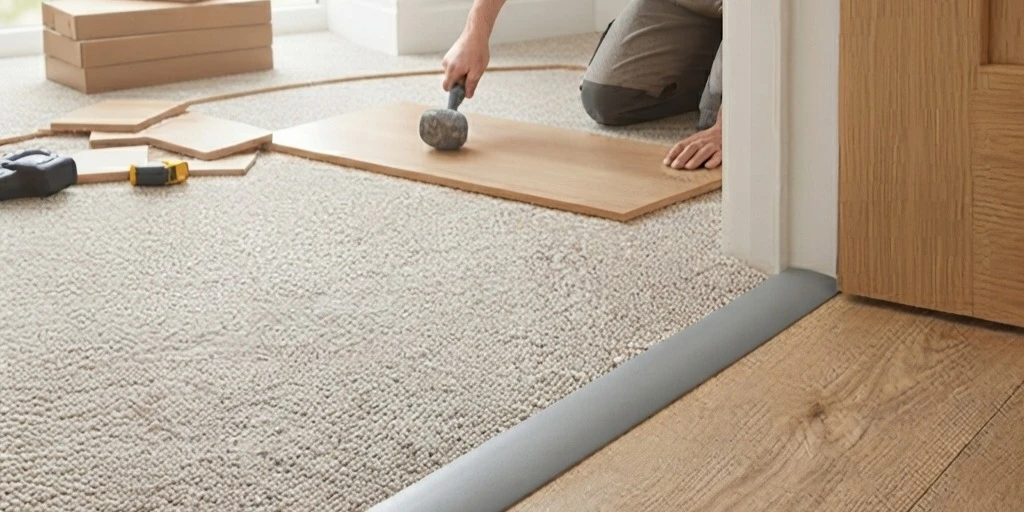
A self-adhesive door threshold is a strip of material—typically aluminium, uPVC, or rubber—fitted along the base of a doorway to bridge the gap between two different floor surfaces or to seal the space beneath a door. Unlike traditional threshold strips, which are fixed in place with screws, self-adhesive versions rely on a strong pre-applied adhesive backing.
You simply peel off the protective film and press the strip firmly into position. There's no drilling, no screws, and generally no specialist tools required.
These products go by several names, including door threshold strips, self-adhesive threshold strips, and floor transition strips. They all describe broadly the same idea: a low-profile bar that sits across a doorway threshold to create a smoother, tidier, and often better-sealed transition.
The mechanics are straightforward. The underside of the strip is coated with a high-tack adhesive, often a foam-backed or industrial-grade tape. Once pressed onto a clean, dry, flat surface, this adhesive forms a bond strong enough to withstand everyday foot traffic.
Most self-adhesive door thresholds are designed with a slight taper or bevel at the edges, which helps prevent trip hazards and allows the strip to sit flush with the surrounding flooring as much as possible. Some also include a small brush seal or rubber flap along one edge, which helps block draughts and light gaps beneath external doors.
Because there's no mechanical fixing involved, the quality of the bond depends almost entirely on how well the floor has been prepared—something worth taking seriously before you begin.
The appeal of these products lies largely in how simple they are to fit. A typical installation looks like this:
Most installations take a matter of minutes rather than hours, which is a large part of their appeal for both DIY users and busy tradespeople.
Choosing between a self-adhesive and screw-fixed threshold often depends on the installation area, expected foot traffic, and the type of flooring. Self-adhesive thresholds offer a convenient option when quick installation and minimal tools are priorities, while screw-fixed alternatives may be better suited to applications where a more permanent mechanical fixing is required.
| Consideration | Self-Adhesive Thresholds | Screw-Fixed Thresholds |
|---|---|---|
| Installation Speed | Very quick and straightforward | Usually takes longer |
| Tools Required | Minimal tools required | Drill, screws, and suitable fixings |
| Floor/Frame Damage | No drilling required | Requires drilling for installation |
| Best Suited For | Light-to-moderate traffic, internal doorways and rental properties | Heavy-traffic areas, uneven floors and permanent installations |
| Adjustability | Generally fixed once applied | Some designs may offer height adjustment |
| Longevity | Good, depending on the adhesive and installation surface | Generally more robust for demanding applications |
Ultimately, neither option is suitable for every situation. Self-adhesive thresholds can be a practical choice for straightforward indoor projects where a neat finish and simple installation are important. Screw-fixed thresholds, on the other hand, may be preferable in areas exposed to heavier use or where a secure, long-term mechanical fixing is needed.
Before buying, measure the width of your doorway accurately, and check the height difference between the two flooring surfaces you're bridging. Threshold strips come in various profiles—flat, ramped, or stepped—so choosing the right shape depends on how significant that height difference is.
It's also worth thinking about finish and material. Aluminium threshold strips tend to suit modern or high-traffic spaces, while rubber or uPVC options can offer a softer look and additional draught sealing. If you're unsure which style fits your doorway, it can help to browse a dedicated range of door thresholds to compare sizes, finishes, and fixing types before making a decision.
Self-adhesive door thresholds offer a genuinely useful, low-fuss way to tidy up flooring transitions, reduce trip hazards, and cut down on draughts—without the disruption of drilling or lengthy installation work. They're particularly well suited to internal doorways, rental properties, and situations where a quick, damage-free fix is the priority.
That said, they're not automatically the best choice everywhere. For heavy-traffic areas, uneven floors, or demanding external applications, a mechanically fixed threshold may serve you better in the long run. The right decision ultimately comes down to your specific doorway, the flooring types involved, the level of use the area gets, and the finish you're after. Taking a few minutes to measure properly and match the product to the job will save you time, money, and hassle down the line.
For a closer look at the range of sizes, profiles, and materials available, visit https://www.doorthresholds.co.uk/.

Anyone who has taken on an outdoor project in Britain knows the weather rarely cooperates for long.
17 September 2026
Unwanted noise travelling between floors is one of the most common complaints in homes, flats and of
12 September 2026
Walk into a modern luxury home today, and you’ll notice something interesting—the bathro
13 May 2026
Be the first to share your thoughts
No comments yet. Be the first to comment!
Share your thoughts and join the discussion below.
.webp&w=3840&q=75)