Sunday, October 4, 2026

Sunday, October 4, 2026
* All product/brand names, logos, and trademarks are property of their respective owners.
From muddy boots and scattered tools to slippery walkways and soaked site entrances — UK construction zones are full of hidden hazards. It only takes one misstep for a worker to go from steady footing to a painful fall. And when wet weather is as common as a cuppa on-site, the danger of slips, trips, and falls becomes a daily risk.
That’s why anti-slip mats have become a vital part of modern construction safety planning. More than just doormats, these specially engineered solutions enhance grip, prevent accidents, and protect the integrity of floors — whether it’s a muddy scaffold step, a slick vinyl site office floor, or a busy loading bay. In the UK, health and safety regulations are clear: employers have a duty of care to reduce preventable hazards. Anti-slip matting is one of the most practical ways to meet that duty. It creates immediate traction underfoot, so workers can move with confidence — even in high-risk or high-traffic areas.
This blog breaks down how anti-slip mats are transforming UK construction sites — from heavy-duty industrial zones to portable washrooms — and why they’re a valuable investment in site safety, longevity, and cleanliness.
On any construction site, there’s an ever-changing landscape underfoot. From puddles on concrete to sawdust on plywood, the mix of materials, weather, and movement makes slips a constant threat. According to the UK’s Health and Safety Executive (HSE), slips, trips, and falls are one of the most common causes of major injuries in construction, and many of these incidents are entirely preventable. The unpredictability of outdoor sites adds to the challenge. One minute it’s dry, the next it’s pouring — and suddenly, scaffold platforms, ramps, and entrance areas become slick and unsafe. Add in muddy boots, heavy machinery, and temporary walkways, and it’s easy to see how the risk escalates.
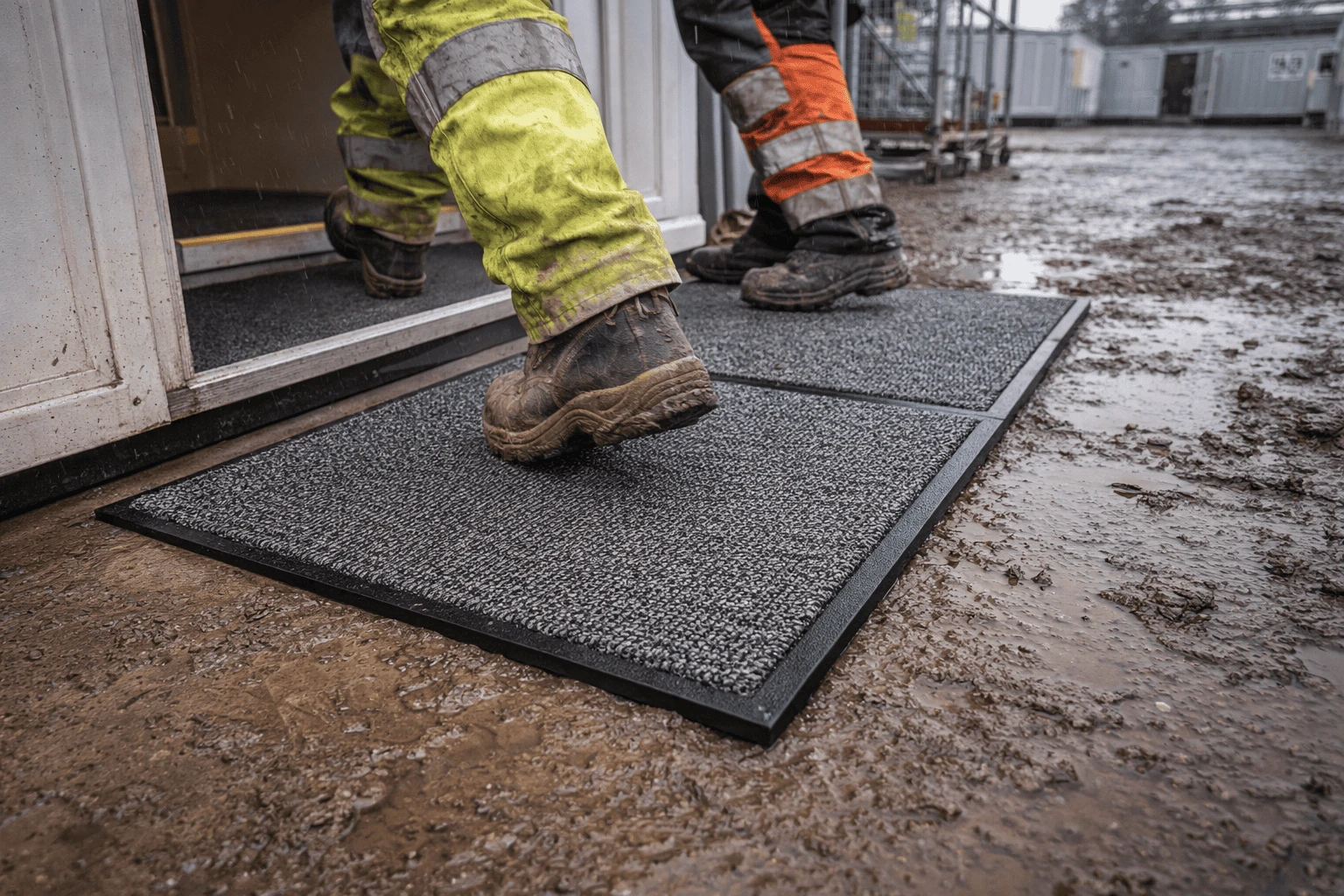
Temporary mats designed for pedestrian use provide clear traction for workers navigating between zones, reducing the risk of slipping on wet surfaces or unstable ground. Products within the Anti-Slip Mats category are suitable for these conditions, offering stability and long-lasting performance.
Construction sites often rely on temporary flooring — concrete slabs, plywood, or even steel plates — none of which are inherently slip-resistant. When moisture or debris accumulates, they become dangerous. Anti-slip mats act as a buffer between workers and risk. With textured surfaces, drainage holes, and gripped undersides, they are designed to stay in place even in challenging conditions. They’re not just about comfort — they’re about safety, compliance, and reducing downtime from preventable injuries.
Heavy-duty zones demand more from flooring. These areas see relentless foot traffic, moving equipment, and environmental exposure. In these conditions, mats need to be exceptionally durable, stable, and effective at trapping debris. Industrial-grade anti-slip mats, such as those designed for barrier and high-traffic zones, offer reliable grip and help manage dirt and debris. Anti-slip mats in this range are suitable for frequent use and provide consistent traction for both indoor and outdoor areas.
These mats aren't limited to one purpose. They're ideal for corridors, entrances, mobile units, and anywhere high-impact performance is needed. Their rugged build means they can serve as long-term safety features, even under demanding site conditions.
Entrance mats serve a simple but critical role: stopping the mess before it spreads. On construction sites, where mud, grit, and water are routine, effective entrance matting can prevent surface wear, indoor hazards, and unnecessary cleaning. High-performance entrance mats often combine moisture absorption with surface grip, allowing workers to wipe off debris before entering sensitive indoor areas. Mats designed with open-hole or drainage features can allow grit and water to pass through while maintaining a safe walking surface.
These mats are easy to clean, quick to dry, and built with materials that resist fraying, curling, or shifting. With proper placement, they reduce cleaning time and extend the life of surrounding floors.
Inside welfare cabins, drying rooms, or temporary offices, door mats help maintain cleanliness and reduce slip risks. Even dry areas can become hazardous when wet or muddy boots are introduced. Low-profile, absorbent mats provide practical solutions for limited spaces, while flexible and washable options allow frequent repositioning and cleaning. These mats are designed to manage fine dust and light moisture efficiently without impeding foot traffic.
These mats are easy to rotate, wash, and reposition as needed — making them ideal for fast-moving and frequently cleaned spaces.
Coir mats are a timeless solution with practical benefits. Made from coconut fibres, they are naturally abrasive and excel at scraping off heavy dirt, especially in outdoor settings.
Natural coir mats work well for high-traffic entry points. They are biodegradable, made from renewable materials, and can withstand the wear and tear of daily site activity — making them a smart choice for eco-conscious site planning.
These mats are durable, environmentally friendly, and require minimal maintenance, which makes them suitable for both indoor thresholds and exposed entrances.
Welfare facilities are prone to water build-up, and without proper flooring, slips in these zones are all too common. Bathroom or wet-area mats provide grip and absorbency where it matters most. Mats with non-slip backing and moisture-absorbing surfaces help reduce accidents in washrooms and shower areas. They are designed to stay in place, dry quickly, and maintain a safe environment for users.
These mats make welfare units more hygienic, comfortable, and safer for everyone. Their ease of cleaning and stability make them a practical addition to any temporary or permanent site facility.
Slip prevention isn’t only about large-scale systems or expensive retrofits — sometimes, small details make the biggest difference. Anti-slip mats play a crucial role in construction safety strategies, helping to protect workers, maintain clean work environments, and support compliance standards. From industrial-grade mats that handle heavy traffic to eco-friendly coir or low-profile indoor options, each mat has a purpose rooted in practical function. Properly chosen and strategically placed mats reduce accidents and contribute to a more organised, efficient, and safer site environment. For readers interested in exploring a range of matting solutions for construction and commercial applications, additional information is available at therubbermats.uk.

UK writer Evan covers home improvement, construction, and lifestyle trends, sharing practical insights for readers.
A home elevator can make everyday movement between floors more convenient, especially in multi-store
25 September 2026
Stairs get more daily wear than almost any other part of a building, yet the edge of each step is of
18 September 2026
When a corner starts chipping, cracking, or scuffing, the instinctive response is often to reach for
14 September 2026
Be the first to share your thoughts
No comments yet. Be the first to comment!
Share your thoughts and join the discussion below.