Sunday, October 4, 2026

Sunday, October 4, 2026
* All product/brand names, logos, and trademarks are property of their respective owners.
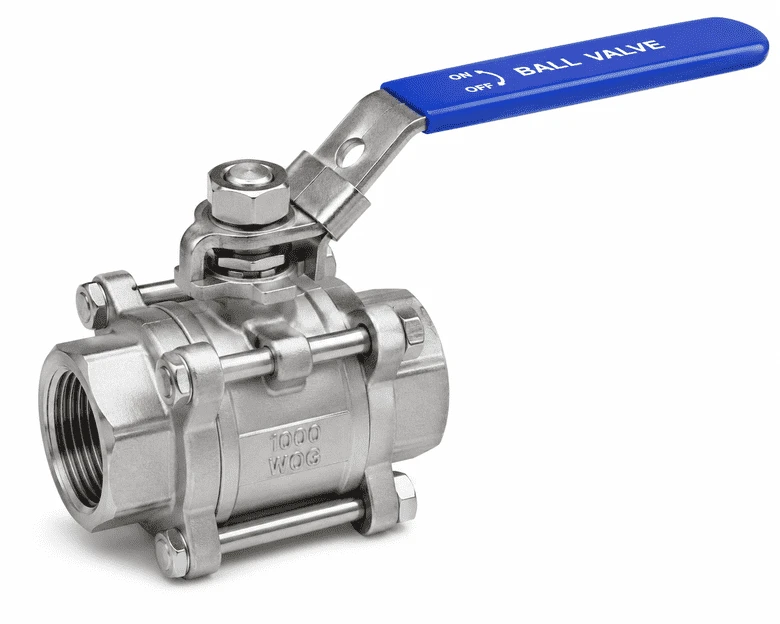
If you are buying a ball valve for the first time, it is easy to assume that all ball valves are more or less the same. After all, they may look similar from the outside. However, once a valve is installed in an industrial system, the differences quickly become apparent.
Choosing the wrong ball valve can lead to leaks, maintenance issues, reduced efficiency, and unnecessary replacement costs. That is why understanding what to look for before making a purchase is important.
Whether you are comparing products from a Ball Valve Manufacturer, researching a Valve Manufacturer, or exploring options from a Valve Manufacturer in India, avoiding a few common mistakes can save you both time and money.
One of the biggest mistakes buyers make is selecting a valve before fully understanding where it will be used.
A valve that performs well in a water system may not be suitable for chemicals, gases, steam, or abrasive media. Every application has different operating conditions, including pressure, temperature, and flow requirements.
Before choosing a valve, ask yourself:
What fluid or gas will pass through the valve?
What is the operating temperature?
What pressure will the valve handle?
How frequently will it be used?
The more clearly you understand your application, the easier it becomes to select the right valve.
Saving money is important, but focusing only on price often leads to problems later.
Many low-cost valves may look attractive initially. However, poor-quality materials and manufacturing standards can result in:
Leakage
Frequent maintenance
Reduced lifespan
Unexpected downtime
Instead of looking only at the purchase price, consider the overall value. A quality valve may cost more upfront but often performs better and lasts longer.
Not all valve materials are suitable for every environment.
For example, some materials offer excellent corrosion resistance, while others are better suited for general-purpose applications. Selecting the wrong material can shorten the lifespan of the valve and affect system performance.
Common factors to consider include:
Exposure to corrosive substances
Operating temperature
Moisture levels
Environmental conditions
A suitable material helps ensure reliable operation over the long term.
Many buyers assume that matching the valve size to the pipe size is enough. In reality, sizing involves much more than that.
An incorrectly sized valve can create:
Restricted flow
Pressure drops
Reduced efficiency
Increased energy consumption
Understanding flow requirements and system design is essential before making a final decision.
Every ball valve is designed to operate within specific pressure and temperature limits.
Unfortunately, some buyers fail to verify these ratings before purchasing.
When a valve operates outside its recommended limits, it may experience:
Seal damage
Leakage
Reduced performance
Premature failure
Always check the technical specifications carefully and ensure they match your operating conditions.
Many industrial facilities are gradually moving towards automation.
However, some buyers purchase manual valves without considering future upgrades. As a result, replacing or modifying the system later becomes more expensive.
If there is any possibility of automation in the future, it is worth considering compatibility with pneumatic or electric actuators from the start.
The quality of a valve often depends on the experience and manufacturing standards behind it.
Before making a purchase, take time to evaluate the manufacturer.
Look for:
Industry experience
Product testing procedures
Quality certifications
Technical support
Manufacturing capabilities
A reputable Valve Manufacturer is more likely to deliver consistent quality and dependable performance.
Similarly, many buyers around the world source products from a trusted Valve Manufacturer in India because of the country's strong engineering expertise and manufacturing capabilities.
Maintenance is not always the first thing buyers think about. Yet it plays a major role in the total cost of ownership.
A valve that is difficult to inspect, repair, or maintain can increase downtime and labour costs.
Before buying, consider:
Ease of maintenance
Availability of spare parts
Service life expectations
Accessibility after installation
These factors can have a significant impact over time.
Standards and certifications exist for a reason. They help ensure that products meet established quality and safety requirements.
Buying a valve without verifying compliance can create operational and reliability concerns.
Always review the available certifications and technical documentation before making a decision.
This is perhaps the most common misconception among buyers.
While two ball valves may appear similar, differences in design, materials, seals, machining quality, and testing procedures can significantly affect performance.
Taking the time to compare specifications rather than appearances can help you make a better investment.
If you want to avoid costly mistakes, follow this simple checklist:
By following these steps, you can improve reliability, reduce maintenance costs, and ensure long-term performance.
Ball valves are known for providing excellent shut-off performance.
A quarter-turn operation allows them to open and close quickly.
Full-port ball valves minimise pressure loss across the system.
Ball valves are widely used in water treatment, chemical processing, oil and gas, and manufacturing industries.
Modern ball valves are often integrated with automated control systems for improved operational efficiency.
Choosing a ball valve may seem straightforward, but small mistakes can lead to significant operational challenges. By understanding your requirements, evaluating product quality, and working with an experienced Ball Valve Manufacturer, you can make a more informed decision.
The next time you compare options from a Valve Manufacturer or a Valve Manufacturer in India, focus on performance, reliability, and long-term value rather than simply looking at the lowest price. Doing so will help ensure that your system operates efficiently for years to come.

I’m Mohammed Kaif, a dedicated writer focused on creating meaningful and reader-friendly content. I enjoy discovering fresh perspectives, simplifying complex ideas, and producing content that informs, inspires, and adds value.
The priorities of modern power distribution systems for high-rises and data centers are efficiency,
18 September 2026
In industrial piping and fluid handling systems, choosing a reliable valve is essential for maintain
7 September 2026
This Cummins 6BT is one of the most reliable Cummins diesel engines produced. It's trusted by truck
18 August 2026
Be the first to share your thoughts
No comments yet. Be the first to comment!
Share your thoughts and join the discussion below.