Sunday, October 4, 2026

Sunday, October 4, 2026
.webp)
* All product/brand names, logos, and trademarks are property of their respective owners.
Walk into any well-finished home and you'll notice something subtle: the edges. Where flooring meets a doorway, where a worktop ends, where two different surfaces sit side by side, there's usually a neat strip of material holding everything together visually and physically. These are bars and edging products, and although they rarely get much attention, they make a noticeable difference to how a finished space looks and performs.
For homeowners, DIY enthusiasts, builders, joiners, interior designers and property renovators across the UK, understanding the difference between the various types of edging trims can save time, money and a fair amount of frustration. This guide focuses on two of the most commonly used options — flat bar trims and wooden timber edging — and explains where each works best.
Bars and edging are finishing trims used to cover, protect or neaten the join between two surfaces. They're most often seen at doorways, along flooring transitions, around panels, and at the edges of worktops or furniture. Rather than leaving a raw, exposed edge, these trims create a clean line that looks intentional and finished.
The category covers a wide range of products, from slim metal strips to solid timber lengths, each suited to different materials, wear levels and design styles. What they share is a common purpose: protecting vulnerable edges while improving the overall appearance of a room.
It's easy to underestimate how much finishing trims contribute to the perceived quality of a build or renovation. A flooring transition without a proper trim can look unfinished, trap dirt, or become a trip hazard as materials shift over time. An exposed panel edge can chip or splinter with everyday use.
Good edging solves practical problems — protecting against wear, covering expansion gaps, and creating safe, level transitions — while also tidying up the visual line between materials. In short, they're small details that carry a lot of weight in how a finished space is judged.
Flat bar trims are exactly what the name suggests: slim, flat lengths of material, usually metal, used to bridge or cover a join between two surfaces. They're typically low-profile, which makes them useful anywhere a subtle, unobtrusive finish is needed rather than a bulky moulding.
Flat bars are a staple in both new-build and renovation work, particularly where different flooring types meet, or where a clean metallic line suits the design better than a timber alternative.
Flat bar trims are available in a range of materials and finishes to suit different budgets and styles, including:
The choice of finish often comes down to how visible the trim will be and what other metalwork or ironmongery is used nearby.
Flat bar trims appear in numerous places around a property, including:
Because they're slim and unobtrusive, flat bars are often the practical choice where floor levels are close to flush and a more substantial edging profile isn't necessary.
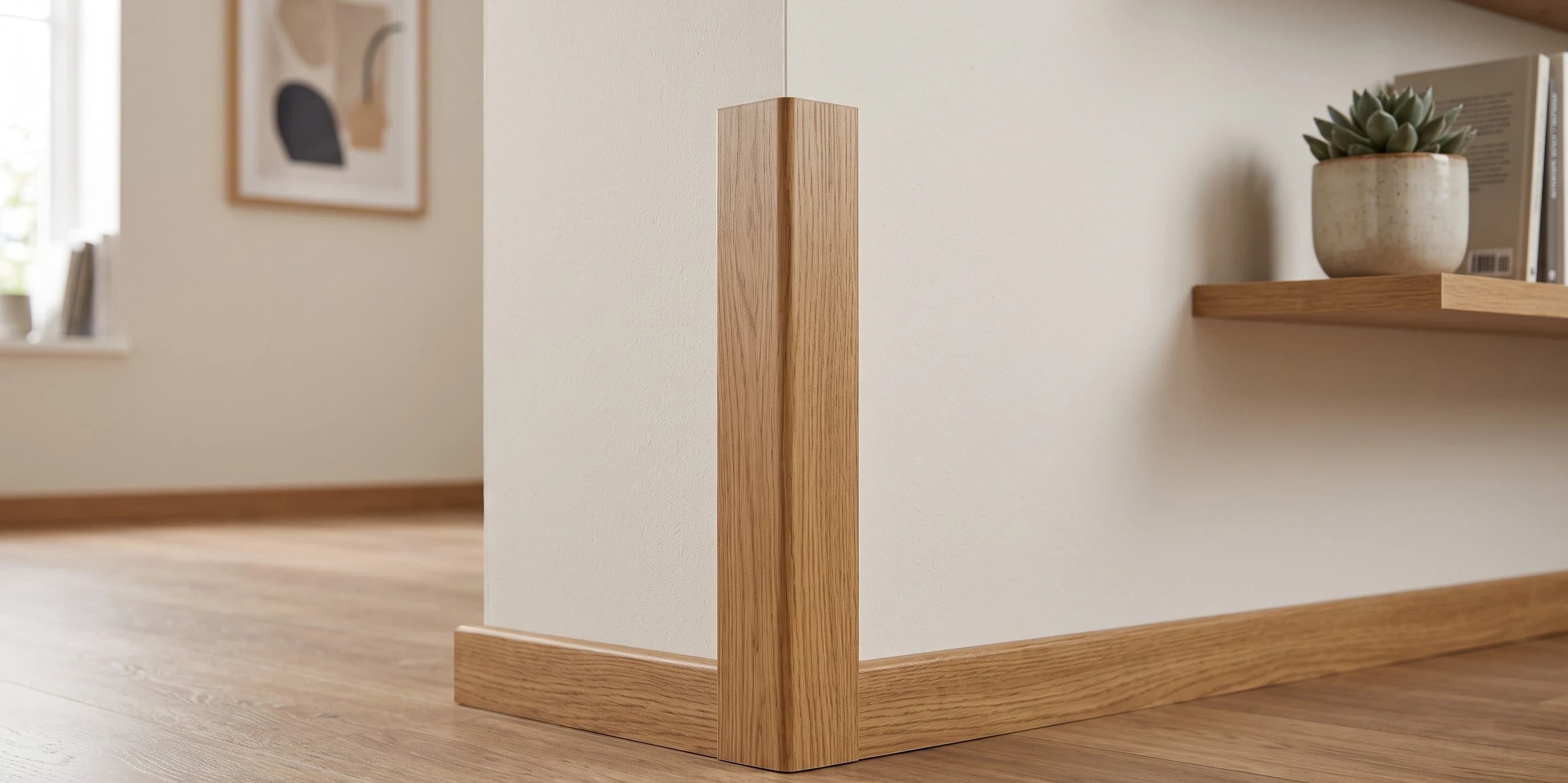
Wooden timber edging refers to solid or veneered timber trims used to finish edges, joints or transitions where a natural material look is preferred over metal. Timber edging is a long-standing choice in joinery and interior finishing, valued for the warmth and texture it brings to a space.
Unlike flat bar trims, timber edging is often chosen not just for function but for its contribution to the overall aesthetic — matching skirting boards, door frames, or furniture in the same room.
Timber edging shows up across a wide range of interior finishing work, including:
Choosing between the two often comes down to the surrounding materials, the level of wear expected, and the overall design direction of the room.
| Consideration | Flat Bar Trims | Wooden Timber Edging |
|---|---|---|
| Best flooring match | Hard flooring transitions, e.g. tile to vinyl | Timber, engineered wood, or timber-to-carpet transitions |
| Traffic level | High-traffic and commercial or semi-commercial spaces | Moderate traffic; domestic and period settings |
| Design style | Modern interiors, slim metallic lines | Traditional or period properties, bespoke joinery |
| Moisture exposure | Well suited to kitchens and bathrooms | Better suited to drier, low-moisture areas |
| Role in the room | Mostly functional, low-profile finish | Often a visible design feature in its own right |
In many renovation projects, both types end up being used in different rooms, depending on the flooring and finishes chosen for each space.
Before settling on a specific product, it's worth thinking through a few practical points:
Getting these details right at the planning stage avoids the common problem of ordering a trim that's the wrong width or finish once flooring has already gone down.
Most flat bar and timber edging trims are designed for straightforward installation, but a few practices help achieve a lasting result:
For anyone unsure which profile or dimensions suit a particular doorway or flooring transition, doorthresholds.co.uk offer a useful reference point, stocking a range of threshold, trim, bar and edging solutions suited to different property types and flooring combinations.
Bars and edging might be one of the smaller elements in a build or renovation, but they play an outsized role in how finished and durable a space feels. Flat bar trims offer a slim, tough, low-maintenance option well suited to hard flooring transitions and busier areas of the home. Wooden timber edging brings warmth and a natural match to existing joinery, making it the better fit for period properties or bespoke furniture work.
Whichever direction suits your project, taking the time to match material, dimensions and finish to the surrounding surfaces will pay off in both appearance and longevity — proof that even the smallest details in a build are worth getting right.

A home elevator can make everyday movement between floors more convenient, especially in multi-store
25 September 2026
Stairs get more daily wear than almost any other part of a building, yet the edge of each step is of
18 September 2026
When a corner starts chipping, cracking, or scuffing, the instinctive response is often to reach for
14 September 2026
Be the first to share your thoughts
No comments yet. Be the first to comment!
Share your thoughts and join the discussion below.