Sunday, October 4, 2026

Sunday, October 4, 2026
* All product/brand names, logos, and trademarks are property of their respective owners.
Door thresholds are one of those small building components that go largely unnoticed until something goes wrong—a curling carpet edge, a draught creeping under the front door, or an uneven step that catches your foot. Despite their modest size, door thresholds play a significant role in the safety, comfort, and finish of any doorway. Whether you're renovating a Victorian terrace, managing a rental property, or fitting new flooring throughout a home, choosing the right threshold matters more than most people realise.
This guide walks through the main types of door thresholds available in the UK, explains where each performs best, and offers practical advice for choosing and fitting one correctly.
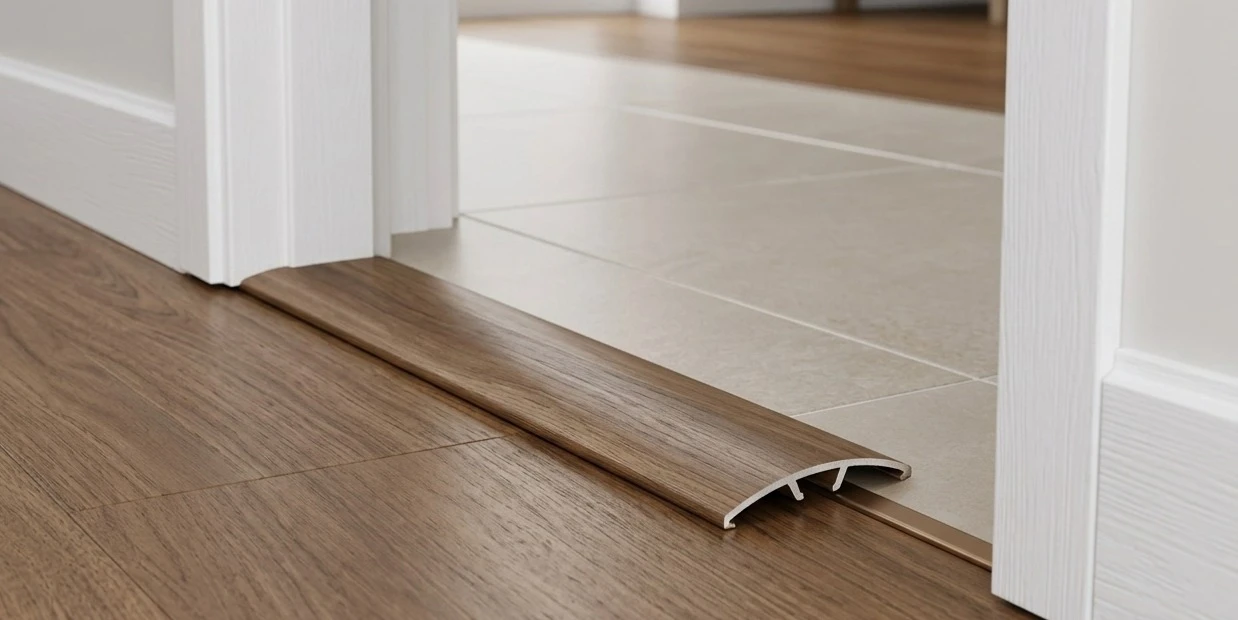
A door threshold strip is fitted at the base of a doorway, typically where two different floor surfaces meet or where an external door meets the outside. It bridges the gap between rooms, floor types, or floor levels, creating a smooth, safe transition underfoot.
Thresholds also serve functional purposes beyond appearance. They can seal gaps against draughts and water ingress, protect vulnerable flooring edges from wear, and provide a defined finish where flooring installations end. Materials range from timber and aluminium to PVC and flexible carpet profiles, each suited to slightly different situations.
A well-chosen threshold does more than tidy up a doorway. In practical terms, it:
Get it wrong, and you risk anything from a scruffy-looking joint to a genuine safety issue—something landlords and property managers in particular need to consider carefully, given their duty of care to tenants and visitors.
With five distinct threshold types available, it can be difficult to know at a glance which one suits a particular doorway. The table below offers a quick side-by-side comparison, pulling out where each option performs best, its standout advantage, and the main limitation worth keeping in mind before you buy.
| Threshold Type | Best For | Key Advantage | Main Limitation |
|---|---|---|---|
| Wood Effect | Internal doorways between matching wood-look floors (e.g. hallway to lounge) | Blends visually with laminate/engineered wood; available in matching shades | Sensitive to moisture; unsuitable for bathrooms, kitchens, or external doors |
| Aluminium | External doors, high-traffic areas, commercial premises | Highly durable, moisture-resistant, won't warp or rot | More utilitarian look; screw-fixed, so installation takes more effort |
| PVC | Kitchens, bathrooms, budget-conscious or rental projects | Damp-resistant, lightweight, affordable, easy to cut | Less durable than aluminium under heavy, constant traffic |
| Self Adhesive | Low-traffic internal doorways, quick DIY fixes, rentals | Fastest, tool-free installation | Adhesive can weaken over time with heavy use or underfloor heating |
| Carpet Cover Profile | Any doorway where carpet meets another flooring type | Prevents fraying/lifting; secures carpet edge with gripper | Finish and colour vary, so matching to adjoining floors takes care |
As a general rule, the right choice comes down to two questions: how much wear will the doorway see, and how much moisture is it likely to be exposed to? Answer those first, and most of the other decisions — appearance, budget, and installation method — tend to fall into place naturally.
With several material options available, choosing the right one comes down to a few practical factors:
If you're comparing threshold profiles across multiple doorways or flooring combinations, it can help to look at a supplier that specialises specifically in this area. Stairsnosing.co.uk organises its range by material and application rather than general flooring accessories, which is useful when you're trying to match a specific job to the right profile rather than guessing from a broad catalogue.
A few general principles apply across most threshold types:
Maintenance is generally straightforward: wipe down PVC and aluminium profiles as part of normal cleaning, and periodically check adhesive-fixed strips for lifting at the edges, re-securing promptly if noticed.
Door thresholds might be a small part of any renovation or flooring project, but they carry real weight in terms of safety, durability, and finish. There's no single "best" material—wood effect suits visual continuity between wood-look floors, aluminium handles heavy traffic and external exposure, PVC offers a practical damp-resistant option, self-adhesive strips suit quick low-traffic fixes, and carpet cover profiles protect and neaten carpet edges specifically.
The right choice depends on where the threshold sits, how much wear it will face, and how the two adjoining floors relate to one another. If you're still weighing up options, browsing a dedicated range of door thresholds can make it easier to compare materials side by side before deciding. Taking a little time to match the profile to the job—rather than defaulting to whatever's cheapest or most familiar—pays off in a doorway that stays safe, tidy, and functional for years to come.

A home elevator can make everyday movement between floors more convenient, especially in multi-store
25 September 2026
Stairs get more daily wear than almost any other part of a building, yet the edge of each step is of
18 September 2026
When a corner starts chipping, cracking, or scuffing, the instinctive response is often to reach for
14 September 2026
Be the first to share your thoughts
No comments yet. Be the first to comment!
Share your thoughts and join the discussion below.