Sunday, October 4, 2026

Sunday, October 4, 2026
* All product/brand names, logos, and trademarks are property of their respective owners.
Stairs are one of the most common places for slips, trips, and falls in both residential and commercial buildings. A worn step edge, a slick surface, or poor visibility on a staircase can turn an ordinary walk up or down into a serious hazard. This is exactly why anti slip stair nosing has become such an essential feature in modern building design, renovation projects, and health and safety compliance.
For property owners, facility managers, and construction professionals, stair safety isn't just about ticking a regulatory box. It's about protecting people, reducing liability, and extending the life of staircases that see heavy daily use. Stair nosing addresses all three concerns at once, offering a simple, cost-effective solution that fits almost any staircase type.
This article looks at what anti slip stair nosing actually does, the different materials and installation methods available, and how to choose the right option depending on your building's needs.
Stair nosing refers to the edge strip fitted along the front of a step, where foot traffic and wear are concentrated. Anti slip stair nosing takes this a step further by adding a textured or abrasive surface that improves grip, even in wet, dusty, or oily conditions.
The step edge is the part of a staircase most prone to rounding, chipping, and smoothing over time. Once that edge loses its texture, the risk of slipping increases significantly, particularly for the elderly, children, or anyone carrying items while using the stairs. Fitting a dedicated nosing product restores grip and also improves the visual definition of each step, which helps people judge distances more accurately, especially in low light.
Choosing a suitable stair nosing profile depends on factors such as the staircase material, level of foot traffic, environment, and required level of slip resistance. Different stair nosing options and profiles can be explored at https://www.stairsnosing.co.uk/ when considering a solution for a particular staircase.
In commercial settings such as offices, schools, warehouses, and retail units, this isn't optional. Building regulations and workplace safety standards in the UK generally require adequate slip resistance on staircases, and anti slip nosing is one of the most straightforward ways to meet that requirement without a full staircase replacement.
Not all stair nosing products are built the same way, and the material you choose should depend on the type of staircase, the level of foot traffic, and the surrounding flooring.
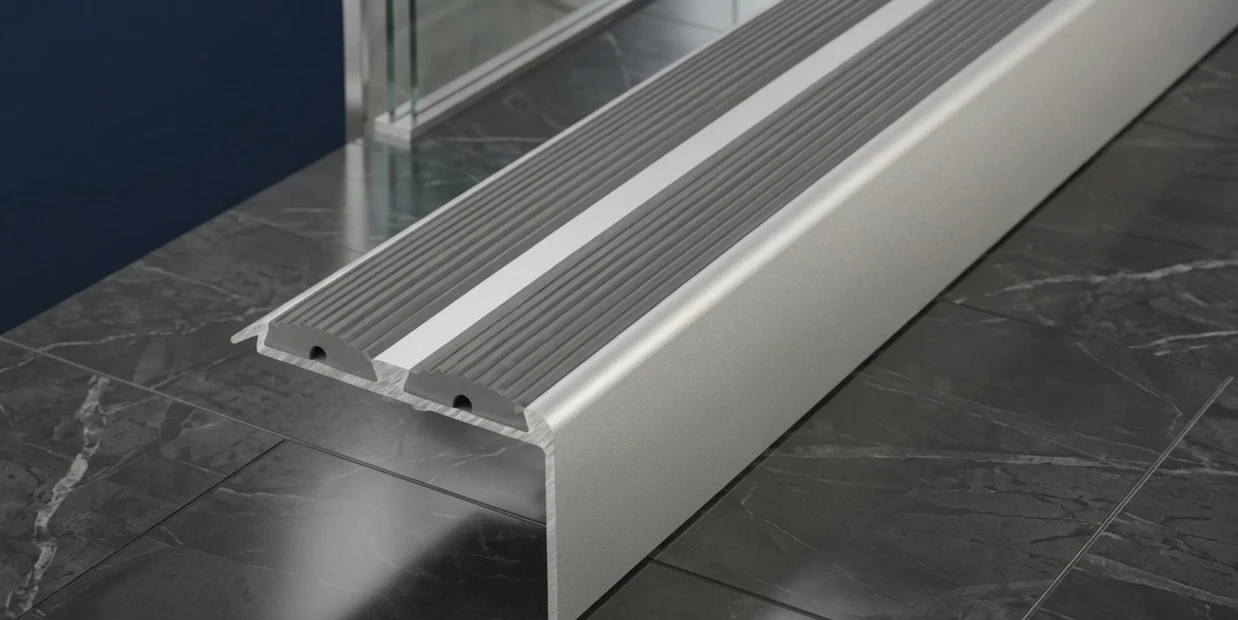
Aluminium stair nosing is a popular choice for commercial and industrial environments because of its durability and resistance to heavy wear. It typically features an insert strip, often filled with carborundum or a similar abrasive material, that provides long-lasting slip resistance. This option works well on staircases that see constant use, such as those in retail stores, transport hubs, or factories.
UPVC stair nosing offers a lighter and more budget-friendly alternative, well suited to residential properties or lower-traffic commercial spaces. It's easy to cut to size, resistant to moisture, and available in a range of colours to blend with existing flooring or stand out as a visual safety cue.
For property owners looking for a quick and low-disruption installation, self adhesive stair nosing is often the most practical option. These products come with a pre-applied adhesive backing, allowing them to be fitted directly onto the step edge without drilling or additional fixings. This makes them ideal for rental properties, temporary fixes, or situations where minimal downtime is a priority.
As luxury vinyl tile flooring has grown in popularity, LVT stair nosing has been developed specifically to match the thickness and finish of these floors. It ensures a seamless transition between the flooring and the step edge, maintaining both the aesthetic and the safety performance of the staircase.
Bullnose stair nosing is defined by its rounded profile, which softens the step edge and reduces the risk of injury from sharp corners. It's commonly chosen for environments with children, older adults, or anyone at higher risk of trips, such as care homes, schools, and family residences.
Selecting the right product comes down to a few practical factors: traffic levels, existing flooring, and how much disruption the installation can allow. The table below offers a quick comparison to help narrow down the options.
| Stair Nosing Type | Best For | Traffic Level | Installation Style |
|---|---|---|---|
| Aluminium Stair Nosing | Commercial, industrial spaces | High | Screw-fixed, heavy-duty |
| UPVC Stair Nosing | Residential, low-traffic commercial | Low to medium | Fixed or adhesive |
| Self Adhesive Stair Nosing | Rentals, quick fixes, minimal downtime | Low to medium | Peel-and-stick, no drilling |
| LVT Stair Nosing | Staircases with vinyl flooring | Medium to high | Matched to LVT thickness |
| Bullnose Stair Nosing | Care homes, schools, family homes | Low to medium | Fixed, rounded profile |
A few points worth expanding on:
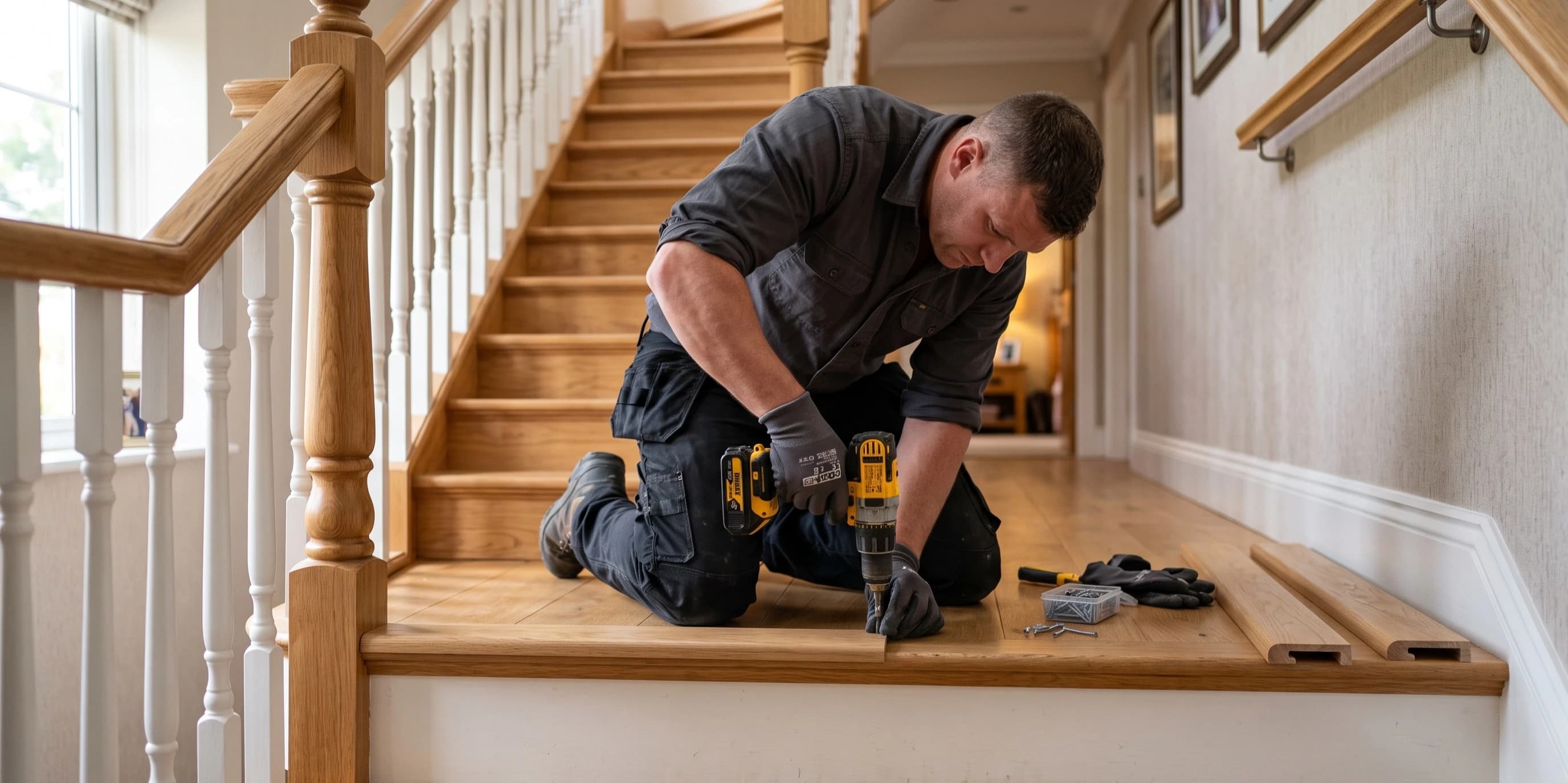
While some stair nosing products, particularly self adhesive types, are designed for straightforward DIY fitting, larger commercial installations often benefit from professional input. Uneven step edges, irregular staircase widths, or curved stairs can complicate the process, and a poorly fitted nosing strip can actually create a new trip hazard rather than solving one.
A few steps make a noticeable difference to the result:
Anti slip stair nosing is generally low maintenance, but a few habits help preserve its performance over time. Regular cleaning prevents the buildup of dust and grime that can reduce grip, particularly on textured aluminium inserts. Periodic inspection is also worthwhile, especially in high-traffic commercial settings, to catch early signs of wear such as loosening edges or fading colour contrast strips.
Most quality stair nosing products are designed to last several years under normal conditions, but replacing worn units promptly is far more cost-effective than dealing with the aftermath of a fall-related incident or claim.
Stair safety is one of those details that's easy to overlook until something goes wrong. Anti slip stair nosing offers a practical, relatively low-cost way to reduce that risk, whether you're managing a single residential staircase or overseeing multiple commercial properties.
The right choice depends on your specific staircase, traffic levels, and flooring type, but the range of materials available today, from aluminium and UPVC to self adhesive and LVT-specific options, means there's a suitable solution for almost every situation. Taking the time to assess your staircases now, rather than after an incident occurs, is a simple step toward safer buildings and better peace of mind.

A home elevator can make everyday movement between floors more convenient, especially in multi-store
25 September 2026
Stairs get more daily wear than almost any other part of a building, yet the edge of each step is of
18 September 2026
When a corner starts chipping, cracking, or scuffing, the instinctive response is often to reach for
14 September 2026
Be the first to share your thoughts
No comments yet. Be the first to comment!
Share your thoughts and join the discussion below.