Sunday, October 4, 2026

Sunday, October 4, 2026
* All product/brand names, logos, and trademarks are property of their respective owners.
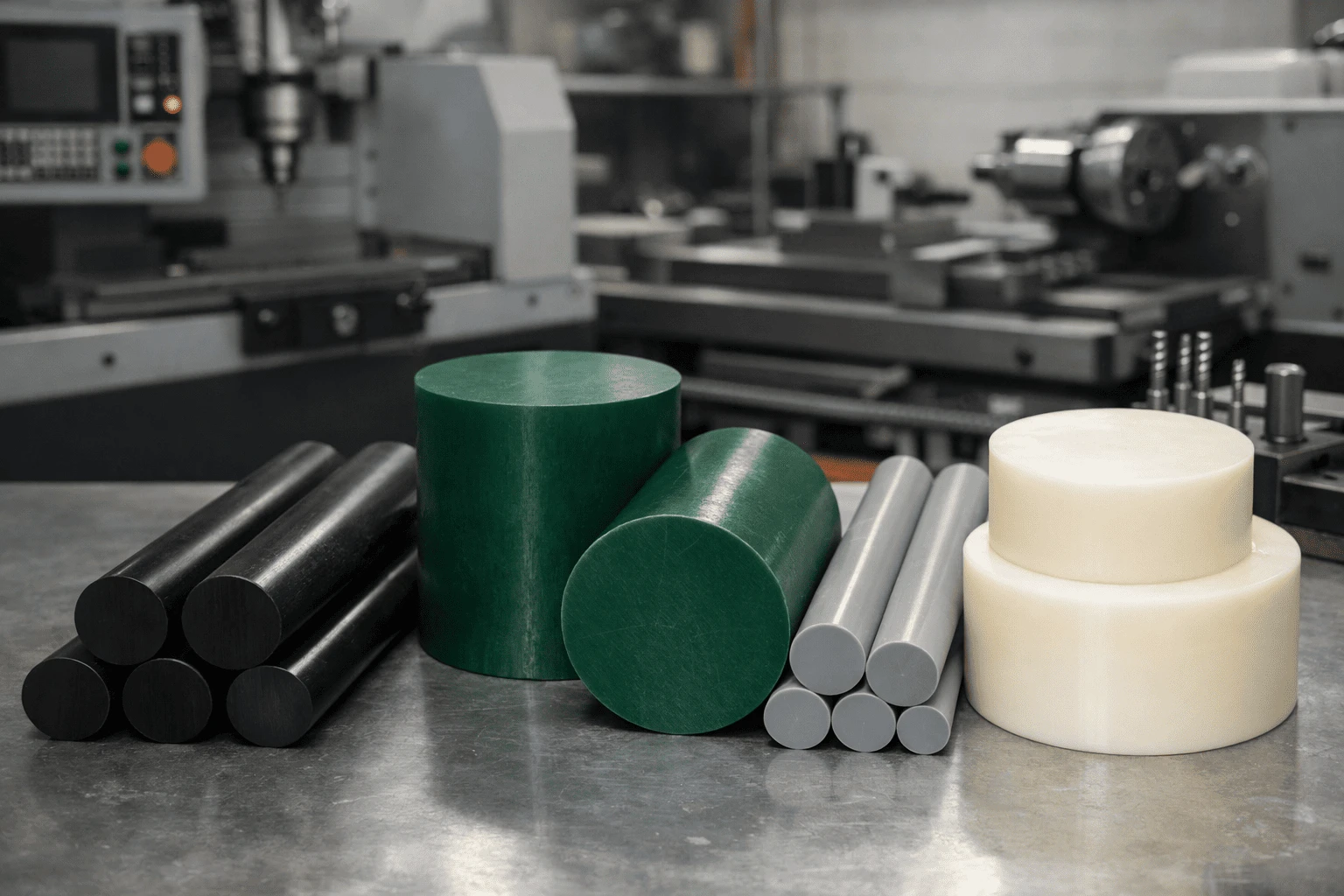
Plastic rods play an essential role across the modern UK industry, supporting everything from precision-engineered components to structural fabrication and DIY workshop projects. With advances in engineering plastics, these materials are increasingly preferred over traditional metals due to their corrosion resistance, lighter weight, machinability, and consistent long-term performance.
Whether used in CNC machining, structural maintenance, or general fabrication, plastic rods offer versatility across multiple sectors. Selecting the right material for a given environment, load requirement, and fabrication method is crucial. Materials like acetal, nylon, HDPE, PTFE, and PEEK each bring specific benefits that influence efficiency and durability. This guide explains how different plastic rods are applied in industrial, engineering, and DIY settings across the UK, helping engineers and makers make informed decisions based on performance rather than assumption.
Plastic rods are no longer a secondary choice compared to metals. In many applications, they are deliberately specified because of their technical advantages.
One of the key benefits is corrosion resistance. Materials such as HDPE, polypropylene, and PVC do not rust, making them ideal for moisture-prone or chemically exposed environments. This is particularly relevant in food processing, water treatment, and agricultural industries.
Weight reduction is another advantage. Plastic rods are significantly lighter than steel or aluminium, reducing strain on mechanical systems and easing installation. In moving assemblies such as conveyors or rotating machinery, a lower mass can enhance overall efficiency. Low-friction performance is another differentiator. Acetal, for instance, provides excellent dimensional stability and smooth operation, making it suitable for components like gears and spacers. Similarly, nylon rods can provide structural strength without excessive weight, supporting load-bearing applications effectively.
Plastic rods are widely used across UK industries:
CNC machining: Acetal and PET are commonly turned into rollers, gears, and custom components. Plastic Rods are used as a reliable material choice, providing stability and predictable performance for intricate parts.
Wear and impact zones: UHMWPE and polyurethane rods provide abrasion resistance and shock absorption in high-impact areas.
Moisture-heavy environments: Polypropylene and HDPE perform reliably in damp or corrosive settings.
Electrical insulation: Tufnol and PVC rods combine structural support with insulating properties, making them suitable for switchgear and other electrical applications.
Engineering plastics maintain stability under stress, making them ideal for precision and heavy-duty applications.
Acetal (POM) offers low moisture absorption and dimensional stability. It machines cleanly and maintains tight tolerances, which is crucial for precision engineering. Medium-diameter rods work well for general machining, while larger sizes support structural components requiring rigidity and smooth motion.
Nylon is widely used for its strength-to-weight ratio and wear resistance. It is suitable for components like rollers, bushes, and load-bearing structural parts. Oilon rods incorporate self-lubricating properties, reducing friction in moving assemblies and lowering maintenance needs.
PET rods provide stiffness and mechanical reliability in structural components. Tufnol combines strength with electrical insulation, supporting applications in heavy-duty engineering contexts and switchgear.
Certain environments require rods that can withstand water, cleaning agents, and corrosive substances.
Polypropylene is valued for chemical resistance and low density, while HDPE performs well in outdoor and moisture-exposed applications. These materials are often used for guides, liners, and structural components where corrosion and impact resistance are key considerations.
PVC rods are suitable for structural and insulating purposes. Their machinability and durability make them a practical choice in environments where corrosion resistance and mechanical stability are essential.
For demanding sectors, advanced engineering plastics offer superior performance.
UHMWPE rods are commonly machined into wear strips and guides, providing low friction and high abrasion resistance. Polyurethane rods deliver flexibility and durability, making them suitable for shock-absorbing and vibration-control roles.
PTFE performs well in chemically aggressive or high-temperature environments due to its non-reactive nature and low friction. PEEK rods offer high thermal stability and strength, supporting specialist sectors such as aerospace and automotive manufacturing.
Selecting the correct rod requires careful evaluation of several factors:
Rod diameter influences load-bearing capacity. Smaller rods are suited for precision components, while larger diameters distribute stress more effectively in structural applications.
Consider exposure to heat, moisture, or chemicals. Materials like PTFE and PEEK excel at elevated temperatures, while HDPE and polypropylene handle damp or corrosive conditions effectively.
Materials such as acetal and PET machine cleanly, making them ideal for CNC operations. Self-lubricating options like Oilon reduce friction in moving assemblies. Evaluating these factors ensures plastic rods deliver consistent long-term performance rather than temporary suitability.
Plastic rods are an essential component in the UK industry, engineering projects, and workshop environments, valued for their corrosion resistance, lightweight properties, machinability, and versatility. These qualities make them suitable for a wide range of applications, from precision components to structural or load-bearing parts. Materials such as acetal, nylon, HDPE, and PEEK provide distinct mechanical, thermal, and chemical properties, allowing engineers to select the right solution for a specific project.
The key is evaluating the task’s requirements, including mechanical load, environmental exposure, and fabrication methods, rather than simply choosing the strongest or most advanced material available. Thoughtful material selection ensures durability, reliability, and long-term efficiency in both industrial and DIY settings, while also helping reduce waste and improve manufacturing consistency. For engineers and workshop professionals seeking further technical guidance and a comprehensive view of available options, additional resources can be found at primeplasts.uk.

A professional blogger specializing in technology, business strategy, and digital growth. Creates well-researched, SEO-focused content designed to educate readers and support informed decision-making.
The priorities of modern power distribution systems for high-rises and data centers are efficiency,
18 September 2026
In industrial piping and fluid handling systems, choosing a reliable valve is essential for maintain
7 September 2026
This Cummins 6BT is one of the most reliable Cummins diesel engines produced. It's trusted by truck
18 August 2026
Be the first to share your thoughts
No comments yet. Be the first to comment!
Share your thoughts and join the discussion below.