Sunday, October 4, 2026

Sunday, October 4, 2026
* All product/brand names, logos, and trademarks are property of their respective owners.
In industrial environments, electrical safety is a fundamental aspect of protecting workers from serious injury and ensuring operations run smoothly. Across the UK, workplaces such as factories, substations, switch rooms, and maintenance areas routinely involve exposure to live electrical equipment. In these settings, the combination of electricity, hard flooring, and human movement can create hazardous conditions if appropriate safeguards are not in place.
Electrical safety matting plays a critical role in managing these risks. Designed to provide insulation between workers and the ground, it helps reduce the likelihood of electric shock while also improving stability underfoot. When integrated into a broader safety strategy, electrical safety matting supports compliance, protects personnel, and contributes to a safer working environment overall.
Electrical hazards are among the most dangerous risks faced in industrial workplaces. Unlike many other hazards, electrical incidents can occur suddenly and with severe consequences, making preventative measures particularly important.
Many industrial sites contain areas where workers must operate near live electrical components. Switchboards, transformers, control panels, and high-voltage equipment are common sources of risk. Environmental factors such as moisture, conductive flooring, metal structures, and confined spaces can increase the likelihood and severity of electric shock.
Slip risks also play a role. Workers standing on smooth or worn floors while handling electrical equipment may lose balance at critical moments. Even a minor slip can increase the chance of accidental contact with live parts. UK health and safety guidance expects employers to identify these combined hazards and implement measures that reduce both electrical and physical risk.
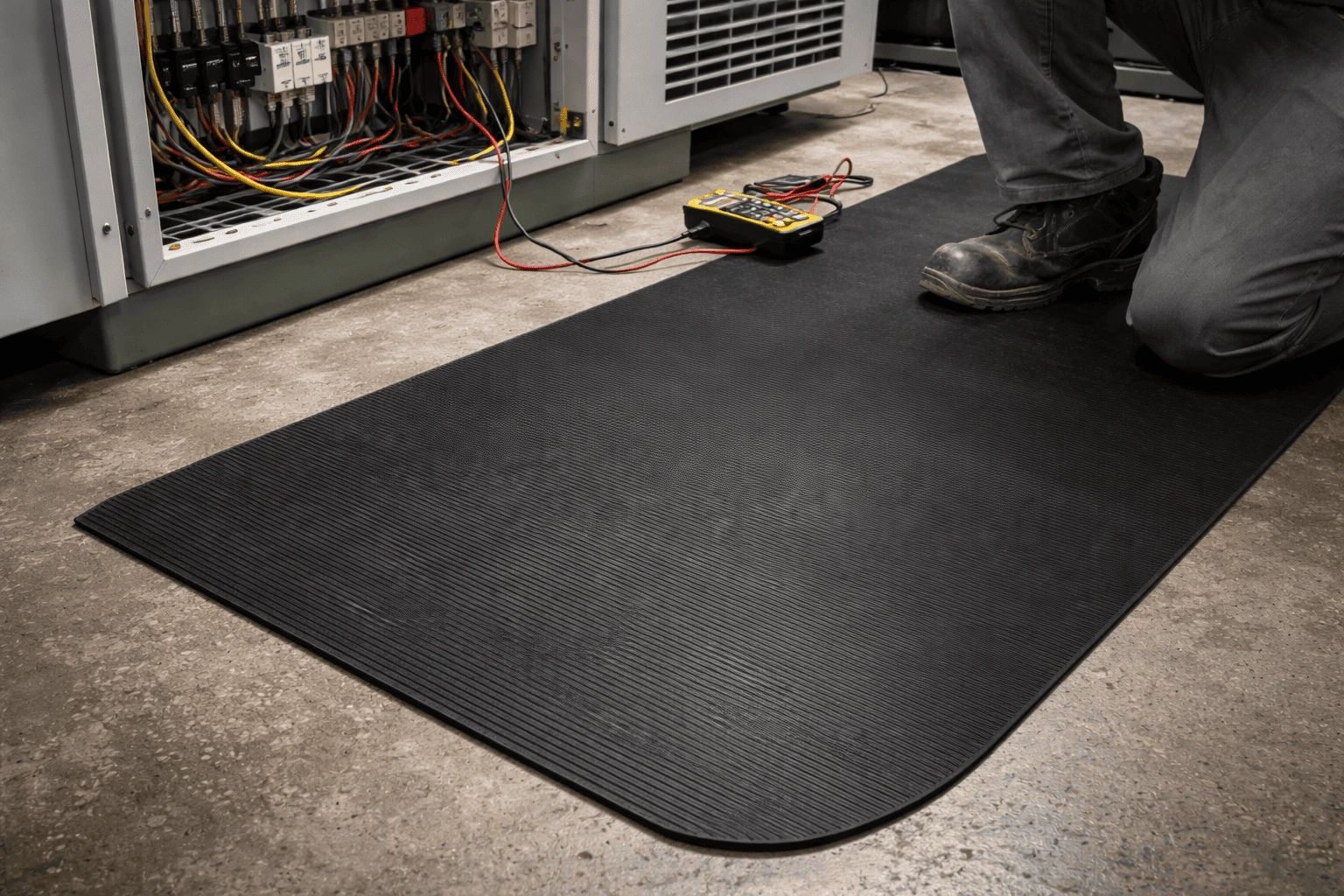
Electrical safety matting works by creating an insulating barrier between the worker and the ground. If accidental contact with live equipment occurs, the mat helps prevent electrical current from passing through the body, significantly reducing the risk of serious injury.
Many electrical safety mats are also designed with non-slip or ribbed surfaces, improving traction in high-risk zones. This added stability is particularly important where workers need to maintain precise positioning while operating or maintaining equipment. By addressing both electrical insulation and footing, safety matting provides layered protection that supports safer working practices.
Not all rubber flooring provides electrical protection. To be effective, electrical safety matting must meet recognised standards that define its insulating performance and suitability for hazardous environments.
In the UK, electrical insulating matting is typically assessed against BS EN 61111, the standard that specifies requirements for insulating floor coverings used for electrical purposes. This standard covers material composition, electrical resistance, and testing methods to ensure mats perform reliably when exposed to electrical hazards.
HSE guidance reinforces the need for suitable insulation in areas where workers may be exposed to live electrical equipment. During inspections or audits, businesses may be asked to demonstrate that appropriate protective measures are in place. Using matting that aligns with BS EN 61111 helps show that electrical risks have been considered and addressed as part of a formal risk assessment.
Electrical safety matting is produced in different classes, each designed for specific voltage ranges. Lower-risk environments may require lower-class protection, while higher-voltage areas demand mats with greater insulating capability. Selecting the correct class is essential for ensuring adequate protection.
Thickness is another key consideration. Thicker mats generally offer greater durability and resistance to wear, making them more suitable for areas with frequent foot traffic or heavy industrial use. Surface finishes, such as fine ribbing or non-slip textures, further enhance safety by improving grip underfoot.
Electrical safety matting is available in various formats to suit different industrial environments. While all options aim to reduce electrical risk, their construction and characteristics make them better suited to specific environments.
General-purpose electrical safety matting is commonly used in controlled environments where electrical exposure is present, but conditions are relatively stable. These mats are typically installed in front of switchboards, control panels, and electrical cabinets to provide consistent insulation during routine operations. Electrical safety matting provides insulating performance while withstanding regular industrial use. These mats can be installed in workplaces where electrical hazards are present.
This matting provides insulation suitable for lower-voltage environments and a non-slip surface that helps maintain stability underfoot. The 6mm thickness balances durability and insulation performance for routine industrial use
For environments with higher electrical risk, Class 2 matting offers increased insulating capability. Wider formats are often used to cover larger working areas, such as substations or electrical rooms, helping ensure consistent protection wherever workers need to stand.
In demanding industrial settings, heavier-duty matting provides additional resistance to wear and deformation. A 9mm thickness, combined with a fine ribbed surface, supports long-term durability while maintaining effective insulation and traction.
Heavy-duty 6mm rubber matting provides insulation and slip resistance in areas with frequent foot traffic. Its durable construction maintains performance under industrial conditions, making it suitable for workshops and factory floors.
Designed for continuous industrial use, this type of matting supports safety in areas where electrical risk and operational demands overlap. Its robust construction helps maintain performance over time, even in challenging conditions.
Choosing the right electrical safety matting requires more than selecting a product off the shelf. A considered approach ensures the matting performs effectively and remains suitable over time.
The starting point is a thorough risk assessment. This should consider the voltage of nearby equipment, how often workers access the area, and the potential consequences of accidental contact. Environmental conditions, such as moisture or conductive surfaces, should also be factored in.
Matching these risks to the appropriate class, thickness, and surface type of matting helps ensure adequate protection without over- or under-specifying the solution.
Electrical safety matting should be positioned where workers are most likely to stand while operating or maintaining electrical equipment. Gaps in coverage can undermine its effectiveness, so careful placement is essential.
Regular maintenance is equally important. Mats should be kept clean, inspected for damage, and replaced when signs of wear appear. Ongoing care helps ensure the matting continues to provide reliable insulation and slip resistance throughout its service life.
Electrical safety matting is a critical component of workplace protection in hazardous industrial environments. By insulating workers from the ground, improving stability, and supporting compliance with recognised standards, it helps reduce the risk of serious electrical incidents.
Understanding UK standards such as BS EN 61111, selecting the appropriate class and thickness, and maintaining matting correctly all contribute to its effectiveness. Thoughtful integration of electrical safety matting into a wider safety strategy can enhance operational resilience and overall workplace safety. For organisations reviewing their approach to electrical safety, exploring practical guidance and resources on therubbermats.uk can provide valuable insights and support informed decision-making.

UK writer Evan covers home improvement, construction, and lifestyle trends, sharing practical insights for readers.
The priorities of modern power distribution systems for high-rises and data centers are efficiency,
18 September 2026
In industrial piping and fluid handling systems, choosing a reliable valve is essential for maintain
7 September 2026
This Cummins 6BT is one of the most reliable Cummins diesel engines produced. It's trusted by truck
18 August 2026
Be the first to share your thoughts
No comments yet. Be the first to comment!
Share your thoughts and join the discussion below.