Sunday, October 4, 2026

Sunday, October 4, 2026
* All product/brand names, logos, and trademarks are property of their respective owners.
Exposed wall corners take more punishment than almost any other surface in a building. From furniture and vacuum cleaners to heavy foot traffic, everyday wear quickly leads to chipped plaster, scuffed paint, and cracked edges.
Wall corner protectors offer a straightforward way to guard against this wear while also giving corners a neater, more finished appearance. This guide explains what they are, why they matter, and how to choose the right type for your project.
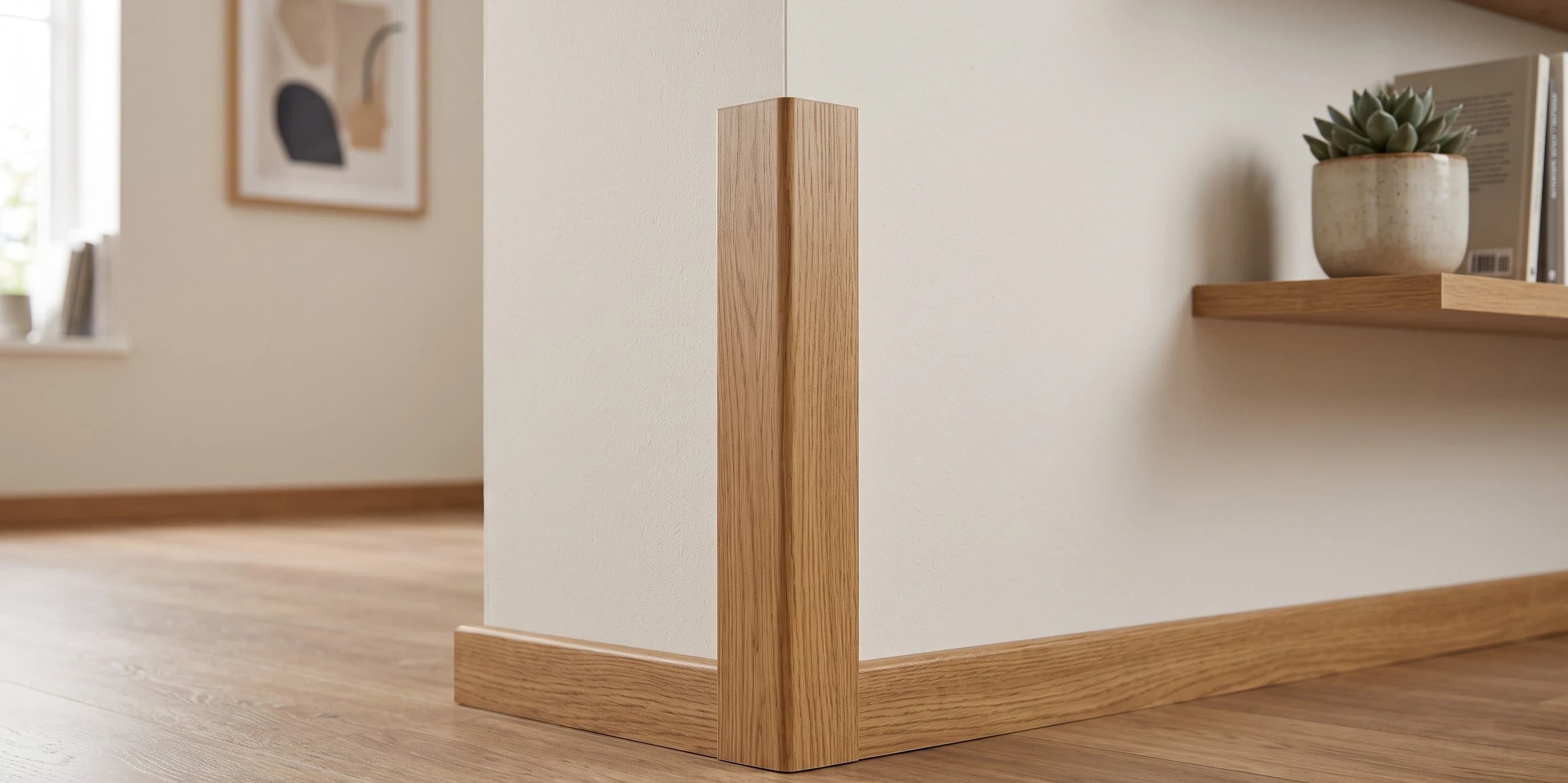
Wall corner protectors are strips or angled profiles fitted over the external edge of a wall corner to shield it from knocks and abrasion. They typically run vertically from floor to ceiling, or along the section of wall most likely to be struck. They are made from materials such as PVC, wood-effect composites, or other durable plastics.
There is a useful distinction to draw between decorative corner trim and heavier-duty corner protection. Decorative trims are often chosen primarily for their finish, helping corners look crisp and complementing skirting boards, architraves, or flooring. Heavier-duty protectors, by contrast, are selected mainly for resilience, and tend to be specified in areas where impact is frequent, such as corridors, warehouses, or commercial kitchens.
Many products sit somewhere between the two, offering both a tidy appearance and genuine protective value, which is one reason corner protectors have become a standard feature in both residential and commercial fit-outs.
Fitting corner protection is a small job with a disproportionately large payoff. The main benefits include:
For landlords, property managers, and contractors working on repeat projects, these benefits translate directly into fewer callbacks and lower long-term maintenance bills.
Two of the most commonly specified options are wood-effect corner trim and PVC corner angle trim, and the right choice generally comes down to the look you want alongside the practical demands of the space.
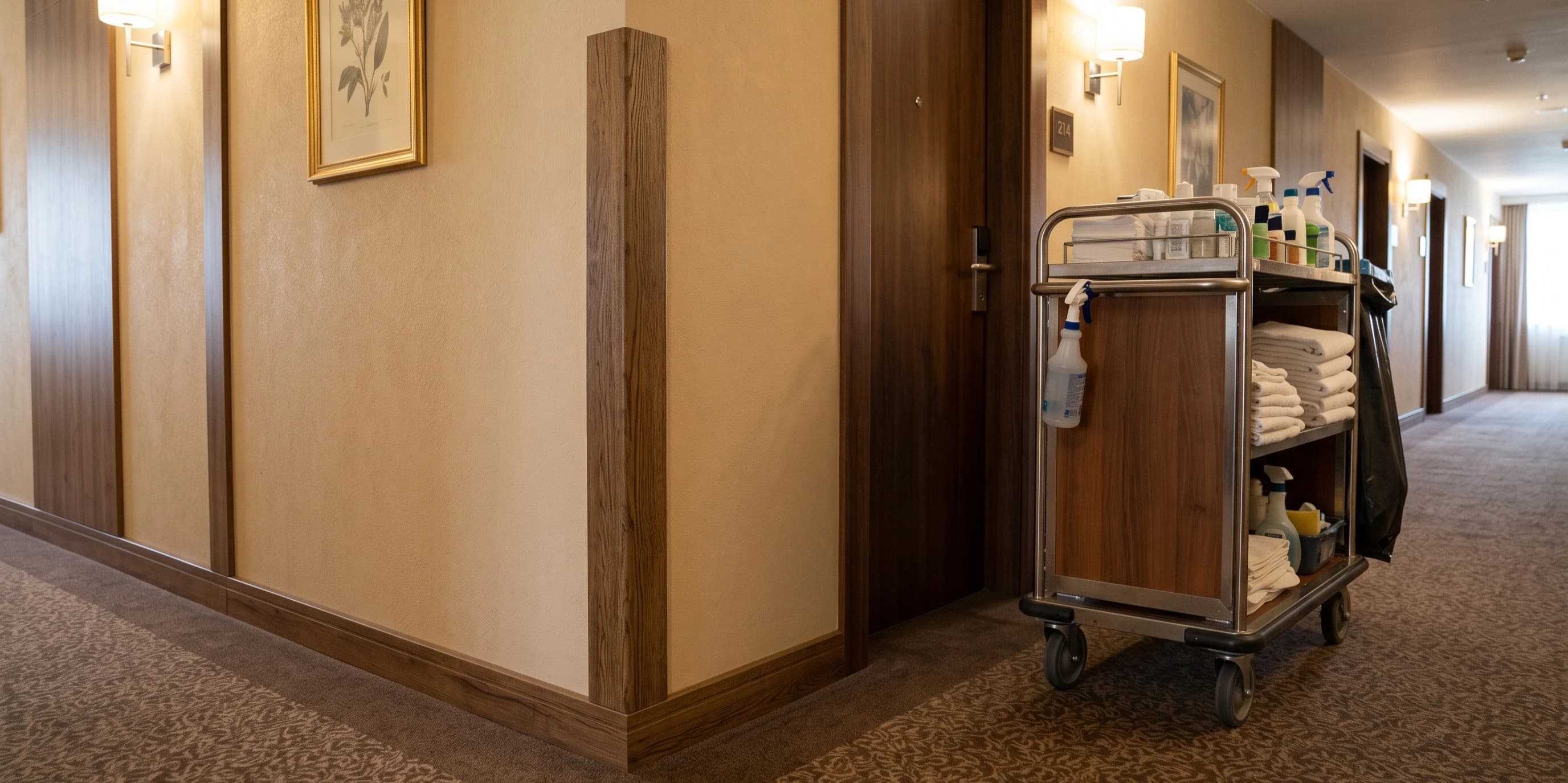
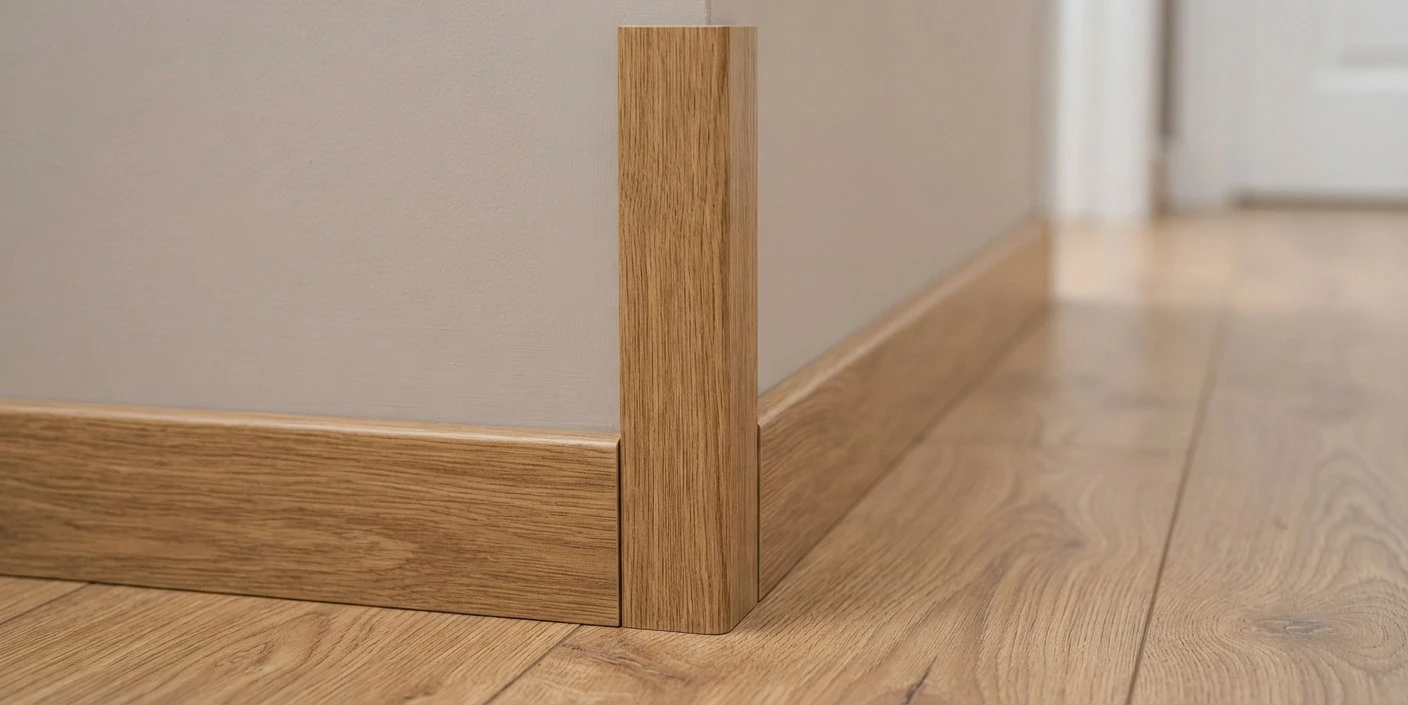
Wood-effect corner trim is a popular choice where the aim is to complement existing wood-style interiors. It works well alongside wooden doors, laminate or engineered wood flooring, and matching skirting boards, helping corners blend into the room rather than standing out as a purely functional add-on. This makes it a sensible option for hallways, living areas, and traditional-style homes where consistency of finish matters.
PVC corner angle trim, on the other hand, tends to be chosen for its practicality. It's generally low maintenance, simple to wipe clean, and well suited to areas that see frequent contact or need a durable, long-lasting finish. Because PVC handles damp conditions more comfortably than some other materials, it can also be a sensible choice for areas such as kitchens, utility rooms, or bathrooms, where moisture is more of a consideration. Its versatility means it's used just as readily in commercial premises, schools, and offices as it is in domestic settings.
Both options are available as part of the wall corner protectors range at Stairs Nosing, giving homeowners and trade customers a straightforward way to match trim to their existing décor.
Not every corner is a simple, symmetrical right angle in practice. Older buildings, refurbishment projects, and awkward architectural layouts often present corners where one wall face needs more coverage than the other. This is where unequal corner protectors come in.
An unequal corner protector has legs of different widths, rather than the matching, symmetrical legs found on a standard protector. This allows it to sit properly against corners where the walls aren't quite even, where one side has suffered more historical damage, or where a wider covering is needed on one face to conceal an uneven edge or an area that has been patched or repaired.
They're particularly useful in refurbishment work, where existing damage or slightly irregular plastering needs to be addressed without a full re-plaster. Rather than forcing a symmetrical trim onto an asymmetrical problem, an unequal profile provides a cleaner, more practical fit.
For many DIY projects, the appeal of a corner protector isn't just the protection itself, but how easily it can be fitted. Self-adhesive wall corner protectors are designed with this in mind, allowing installation without screws, nails, or specialist tools.
This makes them a practical option for anyone who wants to avoid more involved fixing methods, whether that's a tenant looking for a simple improvement, a homeowner tackling a weekend project, or a contractor working to a tight schedule across multiple properties. As with any adhesive-fixed product, results will depend on the surface being fitted to and the preparation carried out beforehand, so it's always worth checking the specific product's fitting guidance before starting.
| Material / Type | Best Suited For | Key Advantage |
| Wood-Effect Trim | Residential, traditional interiors, hallways | Matches existing wood flooring and skirting |
| PVC Angle Trim | Kitchens, commercial areas, high-moisture spaces | Easy to wipe down, moisture-resistant, highly durable |
| Unequal Protector | Older buildings, refurbishment, uneven plaster | Covers unequal damage or asymmetrical wall faces |
| Self-Adhesive | Quick DIY jobs, rentals, fast commercial fixes | No power tools, nails, or screws required |
Corner protection has applications well beyond the home. Common settings include:
The best approach depends on the location and level of traffic. A durable PVC or wood-effect corner trim fitted along the full exposed edge is generally the most effective way to guard against everyday knocks and scuffs.
Yes. PVC corner protectors are widely used in domestic settings, particularly in hallways, kitchens, and other areas where durability and easy cleaning are useful.
It's a corner protector with two legs of different widths, designed for corners where one wall face requires more coverage than the other, such as uneven or previously damaged edges.
Yes, a well-fitted trim can neaten up a corner that has become chipped or uneven, giving the wall a tidier, more finished look.
Protecting wall corners is a small, practical step that pays off in fewer repairs, tidier finishes, and walls that hold up better to daily use. Whether you need a wood-effect trim to match existing décor, a PVC corner angle trim for a busy, practical space, an unequal protector for an awkward or damaged corner, or a self-adhesive option for a quick DIY fix, there's a suitable solution for most situations.
For homeowners, builders, and contractors looking to explore options, it's worth browsing the corner trims and protectors available from Stairs Nosing to find a match for your project.

Anyone who has finished a flooring project knows the job isn't quite done once the last plank or til
9 September 2026
In contemporary architecture and interior design, material choices define not only how spaces functi
9 February 2026
In professional outdoor and event environments, flooring plays a far more critical role than simply
3 February 2026
Be the first to share your thoughts
No comments yet. Be the first to comment!
Share your thoughts and join the discussion below.
.webp&w=3840&q=75)