Monday, July 27, 2026

Monday, July 27, 2026
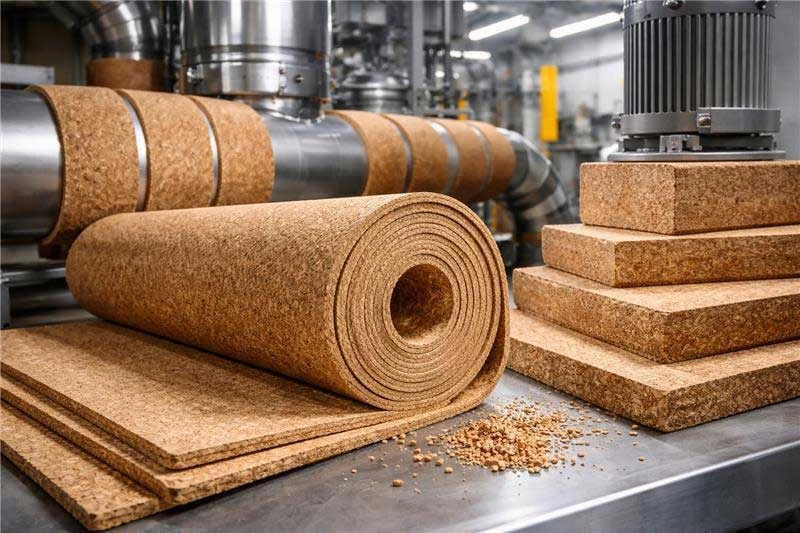
* All product/brand names, logos, and trademarks are property of their respective owners.
Industrial environments are inherently dynamic. Heavy machinery, compressors, presses, and conveyor systems generate vibrations that travel through floors, walls, and structural supports. Left unchecked, these vibrations can lead to equipment wear, noise pollution, reduced operational efficiency, and even structural damage. Engineers and plant managers face the challenge of selecting materials that effectively reduce vibration without complicating installation or maintenance.
Cork, a natural and renewable material, has long been valued for its versatility. Its unique cellular structure allows it to absorb and disperse energy efficiently while maintaining durability under heavy loads. Unlike synthetic alternatives, cork combines flexibility, thermal resistance, and sustainability in one material.
From industrial isolation pads to custom sheets and rolls, cork products can be applied across machinery and facility infrastructure to reduce vibration and improve operational stability. By understanding cork’s material properties and practical applications, industrial operators can make informed decisions that enhance equipment longevity and efficiency.
Vibration in industrial settings arises from multiple sources:
Rotational imbalance: Motors, compressors, and pumps create cyclical forces.
Impact loads: Presses, stamping machines, and conveyors generate shock forces.
Operational resonance: Repeated machinery motion can amplify vibration within facility structures.
These vibrations have tangible consequences:
Equipment wear and maintenance: Constant motion causes bolts to loosen, bearings to degrade, and machinery components to fail earlier.
Worker health and safety: Noise and tremors increase fatigue, reduce productivity, and contribute to hearing strain.
Structural issues: Floors, foundations, and walls can experience microfractures and warping.
Traditional solutions such as rubber mats, springs, or composite pads often fail to provide the balance between durability, installation ease, and consistent long-term performance. Cork, however, offers a material-based solution that naturally mitigates these challenges without adding complexity to the installation process.
Cork’s effectiveness stems from its unique cellular structure. Each cork cell is air-filled and sealed, providing compressibility, elasticity, and shock absorption simultaneously. Key properties include:
Cork can compress under heavy loads and return to its original form without permanent deformation. This elasticity allows it to absorb vibrations across a wide frequency range, protecting both machinery and floors.
The air-filled cells act as natural shock absorbers. When vibrational energy is applied, cork compresses microscopically and dissipates energy that would otherwise pass directly into equipment or infrastructure.
Cork maintains performance in fluctuating temperatures and high-humidity environments. It resists mold, rot, and swelling, making it suitable for factories, warehouses, and workshops.
Despite being light, cork can support heavy machinery. Its low density ensures minimal stress on floor structures while providing effective vibration dampening.
Cork is a renewable, biodegradable material, unlike many synthetic alternatives. Facilities aiming for eco-friendly industrial solutions often prefer cork for both sustainability and operational efficiency.
Cork can be applied across industrial settings in multiple ways:
Cork pads placed beneath heavy machinery absorb vibration before it reaches the floor or adjacent equipment. This is particularly useful for presses, compressors, and HVAC equipment.
Combining cork sheets with other materials such as rubber or foam creates composite layers that target specific vibration frequencies. These layers can be customized based on machinery weight and vibration patterns.
Cork sheets under machinery bases prevent resonance from impacting precision instruments, ensuring operational accuracy. Non-adhesive cork sheets are ideal for these applications, as they can be repositioned, cut, and fitted according to specific equipment layouts.
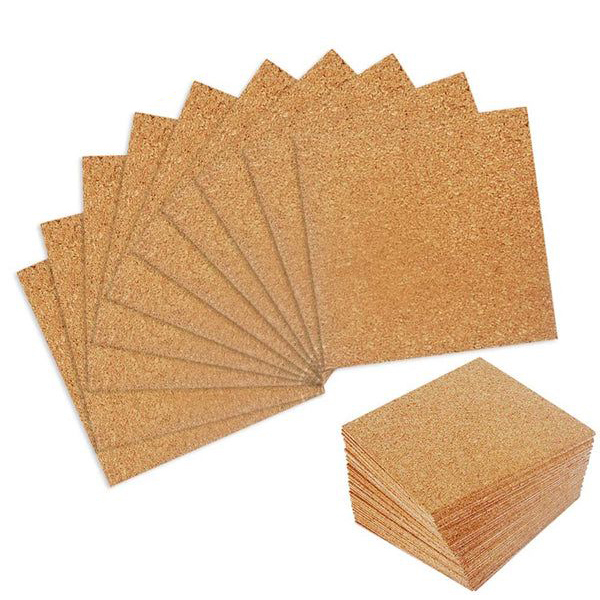
Under flooring: Reduces impact and transmitted vibrations in walkways and production areas.
Wall panels: Minimizes vibration transfer in multi-story facilities.
Conveyor frames: Prevents structural fatigue from continuous mechanical movement.
Solutions from Cork Rolls provide ready-to-use rolls and sheets that integrate seamlessly into industrial environments, reducing installation time while enhancing machinery longevity.
Many industrial facilities still rely on rubber pads, springs, or synthetic composites for vibration dampening. Comparing cork against these materials:
| Property | Cork | Rubber | Metal Springs |
|---|---|---|---|
| Elasticity | High | Medium | High |
| Vibration Damping | Excellent | Good | Limited |
| Thermal Stability | Very High | Medium | Varies |
| Moisture Resistance | Excellent | Variable | Poor |
| Ease of Installation | Easy | Moderate | Difficult |
| Sustainability | High | Low | Medium |
Advantages of cork:
Maintains performance over time without degrading in temperature or humidity extremes.
Reduces maintenance costs due to durability and low wear.
Environmentally friendly, aligning with sustainable manufacturing practices.
Lightweight, yet capable of supporting heavy industrial machinery.
Cork provides an effective, durable, and eco-friendly alternative to traditional vibration control materials, balancing performance, longevity, and ease of use.
When choosing cork for industrial vibration control, consider:
Density: Higher-density cork offers stronger load support.
Thickness: Thicker sheets absorb more energy but may compress more under heavy equipment.
Environmental Conditions: Ensure the cork can withstand the facility’s temperature and moisture levels.
Installation Needs: Self-adhesive sheets simplify placement, while non-adhesive sheets allow flexibility for repositioning and retrofitting.
A medium-sized manufacturing facility struggled with vibration affecting precision milling equipment. Rubber pads previously used wore out quickly and provided inconsistent dampening. After replacing the base pads with cork sheets, the plant noticed:
Significant reduction in transmitted vibration
Improved machine accuracy
Lower maintenance downtime
Enhanced worker comfort due to reduced noise
This example highlights how cork solutions provide measurable operational benefits without the complexity or environmental cost of synthetic materials.
Industrial environments are inherently dynamic. Heavy machinery, compressors, presses, and conveyor systems generate vibrations that travel through floors, walls, and structural supports. Left unchecked, these vibrations can lead to equipment wear, noise pollution, reduced operational efficiency, and even structural damage. Engineers and plant managers face the challenge of selecting materials that effectively reduce vibration without complicating installation or maintenance.
Cork, a natural and renewable material, has long been valued for its versatility. Its unique cellular structure allows it to absorb and disperse energy efficiently while maintaining durability under heavy loads. Unlike synthetic alternatives, cork combines flexibility, thermal resistance, and sustainability in one material.
From industrial isolation pads to custom sheets and rolls, cork products can be applied across machinery and facility infrastructure to reduce vibration and improve operational stability. By understanding cork’s material properties and practical applications, industrial operators can make informed decisions that enhance equipment longevity and efficiency.

We specializes in high-quality cork sheets, rolls, and insulation solutions for industrial, commercial, and DIY applications. We focus on providing durable, sustainable, and easy-to-install cork products to meet diverse material and insulation needs.
In UK construction, sealing isn’t just a finishing touch — it’s what keeps buildin
14 February 2026
Industrial and construction sites are often busy, high-traffic environments where clarity and organi
5 February 2026
In the UK construction and building sector, keeping outdoor areas safe, durable, and protected is an
2 February 2026
Be the first to share your thoughts
No comments yet. Be the first to comment!
Share your thoughts and join the discussion below.





11.webp&w=3840&q=75)